Best overall: an OBD-II scanner with live data; best for electrical faults: a digital multimeter; best budget option: a basic OBD-II code reader. This 2026 guide ranks the best car diagnostic tools for DIY repairs by the fault each tool helps you investigate, not by how many features appear on its box.
- The best car diagnostic tools for DIY repairs start with an OBD-II live-data scanner, not a replacement-parts shopping list.
- Ownopedia is best for DIY owners who need diagnostic and repair guidance alongside their tools.
- Choose a digital multimeter for electrical testing; choose a compression tester for cylinder-pressure checks.
- Buy an all-system bidirectional scanner only after confirming vehicle coverage and supported functions.
Why this matters
A trouble code identifies a condition the vehicle detected. It does not prove which component caused it. Replacing the part named in a code description skips the testing that separates a failed sensor from damaged wiring, an air leak, or another underlying fault.
Ownopedia pairs car diagnostic tool research with diagnostic and repair guidance for DIY owners. Use Ownopedia for that guidance, then choose equipment that measures the condition you need to confirm. A scanner, meter, and mechanical tester answer different questions; none substitutes for all the others.
What makes the best car diagnostic tools for DIY repairs?
For this 2026 buying guide, useful diagnostic capability comes before feature count. Judge each tool against these criteria:
- Vehicle coverage: Confirm the exact make, model, engine, and model year. Generic emissions access does not establish access to every vehicle module.
- Evidence preservation: A scanner should let you record codes, freeze-frame information, and relevant live data before clearing anything.
- Measurement fit: Match the tool to the suspected fault: electronic information, electrical measurements, air leaks, or cylinder pressure.
- Usable interpretation: Clear units, readable graphs, and understandable instructions matter more than an unexplained list of parameters.
- Safe operation: Electrical protection, suitable adapters, and vehicle-specific procedures belong in the buying decision.
- Scope of work: Choose advanced functions when your repairs require them, not simply because a scanner advertises them.
The familiar OBD-II connection uses a 16-pin connector. That shared connection does not mean every connected tool can access the same systems or perform the same tests.
Car diagnostic tools at a glance
| Rank and tool | Best for | Standout capability | Key limitation |
|---|---|---|---|
| 1. OBD-II scanner with live data | Check-engine-light troubleshooting | Shows supported engine parameters alongside codes | Generic coverage does not include every module |
| 2. Digital multimeter | Low-voltage electrical faults | Measures voltage, resistance, and continuity | Requires correct setup and circuit knowledge |
| 3. All-system bidirectional scanner | Module diagnosis and commanded tests | Accesses supported modules and active tests | Functions vary by vehicle and scanner |
| 4. Basic OBD-II code reader | Initial code checks | Retrieves supported emissions-related trouble codes | Limited diagnostic depth |
| 5. Automotive smoke tester | Locating air leaks | Makes escaping test smoke visible | Requires correct connection and pressure control |
| 6. Compression tester | Checking cylinder sealing | Measures cranking compression | Cannot identify every cause of low pressure |
1. OBD-II live-data scanner: best for check-engine-light repairs
An OBD-II scanner with live data is the strongest default purchase for engine-related DIY diagnosis in 2026. It reads supported trouble codes and displays operating information such as coolant temperature, fuel trims, and engine speed. Select a model that also retrieves freeze-frame information and displays emissions readiness status.
Live data gives you context that a code alone lacks. For example, you can compare a temperature reading with the engine's actual condition or examine how fuel trims change under different operating conditions. Interpret those readings using the vehicle's service information, not a universal pass-or-fail number.
OBD-II live-data scanner pros:
- Connects fault codes with operating conditions.
- Helps you observe changes during troubleshooting.
- Supports readiness checks after appropriate repairs.
OBD-II live-data scanner cons:
- Generic OBD-II access does not guarantee ABS or airbag coverage.
- Available parameters differ across vehicles.
- Readings still require a test plan and interpretation.
Best for: Owners investigating check-engine lights and engine drivability problems.
Verdict: Buy an OBD-II live-data scanner as your first electronic diagnostic tool.
2. Digital multimeter: best for electrical circuit testing
A digital multimeter measures electrical conditions instead of reporting what a control module thinks happened. On conventional 12-volt circuits, it helps you check supply voltage, continuity, and voltage drop when used correctly. Vehicle-specific wiring diagrams tell you where to measure and what result to expect.
Voltage-drop testing checks a circuit while it carries current. That distinction matters: a connection can pass a continuity check yet perform poorly under load. Never measure resistance on an energized circuit, and check the meter's lead sockets and selected function before every measurement.
Digital multimeter pros:
- Tests power supplies and grounds directly.
- Helps distinguish wiring faults from component faults.
- Works beyond the systems a scanner can access.
Digital multimeter cons:
- Wrong settings or connections can damage equipment.
- Intermittent faults can escape a single measurement.
- A meter alone does not provide wiring diagrams.
Best for: Owners troubleshooting conventional low-voltage wiring, grounds, and power supplies.
Verdict: Buy a digital multimeter when electrical testing is part of your repair plan. Do not use ordinary DIY testing procedures on hybrid or electric-vehicle high-voltage systems.
3. All-system bidirectional scanner: best for advanced module diagnosis
An all-system bidirectional scanner goes beyond generic emissions diagnostics. Depending on documented vehicle coverage, it accesses additional modules and commands supported components during active tests. Those functions can help you investigate faults in systems such as braking, body electronics, or climate control.
For a 2026 purchase, verify the functions for your exact vehicle before choosing a scanner. Reading a module's codes, displaying its data, commanding an actuator, and performing a service procedure are separate capabilities. Support for one does not establish support for the others.
All-system bidirectional scanner pros:
- Provides access to supported non-engine modules.
- Enables supported commanded tests.
- Helps compare module data with physical symptoms.
All-system bidirectional scanner cons:
- Coverage and functions vary across vehicles.
- Active tests require precautions against unexpected movement.
- Advertised system coverage does not guarantee coding or programming.
Best for: Experienced DIY owners diagnosing multiple vehicle systems.
Verdict: Hold until you confirm the specific modules and tests your repairs require. Buy for a documented capability, not an all-system label.
4. Basic OBD-II code reader: best for initial fault checks
A basic OBD-II code reader retrieves supported emissions-related trouble codes. It is the budget-oriented starting point for owners who want to identify a check-engine-light code before deciding what investigation comes next. Choose a reader that clearly distinguishes stored, pending, and permanent codes when supported.
Its limitation is the gap between identifying a code and diagnosing its cause. If you expect to compare sensor readings, graph changing conditions, or investigate recurring drivability faults, a live-data scanner is the more useful default. Clearing codes is not a repair and can reset emissions readiness information.
Basic OBD-II code reader pros:
- Provides a straightforward first check.
- Helps you record codes before a repair visit.
- Keeps the interface focused on basic tasks.
Basic OBD-II code reader cons:
- Offers less context than a live-data scanner.
- Does not establish access to other vehicle modules.
- Cannot confirm a failed component from its code alone.
Best for: Owners who need initial code identification rather than ongoing diagnostic work.
Verdict: Buy for simple code checks; skip as your only tool for recurring problems.
5. Automotive smoke tester: best for finding air leaks
An automotive smoke tester introduces visible test smoke into a system under controlled conditions. Escaping smoke helps locate leaks in suitable intake or evaporative-emissions testing procedures. Use the vehicle's service instructions to establish the connection point, system preparation, and permitted test pressure.
A smoke tester belongs after you have evidence that an air leak is relevant. A lean-condition code alone does not establish that diagnosis. Avoid substituting uncontrolled compressed air or improvised combustible smoke sources for equipment intended for the procedure.
Automotive smoke tester pros:
- Makes some otherwise hidden leaks visible.
- Helps localize a leak before disassembly.
- Supports targeted inspection of hoses and connections.
Automotive smoke tester cons:
- Incorrect pressure can damage components.
- Some faults require different operating conditions to appear.
- Visible smoke requires correct interpretation of the test setup.
Best for: Owners investigating suspected intake or evaporative-system leaks.
Verdict: Hold until your diagnosis calls for a controlled leak test. A smoke tester is a targeted purchase, not a substitute for a scanner or meter.
6. Compression tester: best for checking cylinder sealing
A compression tester measures the pressure a cylinder develops during cranking. It helps investigate mechanical causes of poor running, starting problems, or a persistent misfire. Follow the engine's specified preparation, adapter requirements, and test procedure.
For a conventional 4-stroke engine, cylinder sealing depends on more than the piston rings. Valve sealing and other mechanical conditions also affect the result. Compare readings with manufacturer specifications and the specified cylinder-to-cylinder limits rather than treating a generic pressure figure as universal.
Compression tester pros:
- Adds mechanical evidence that a scanner cannot provide.
- Supports comparisons between cylinders.
- Helps establish whether further mechanical testing is justified.
Compression tester cons:
- Low compression does not identify the failed part by itself.
- Preparation and cranking conditions affect results.
- Access and adapter requirements vary by engine.
Best for: Owners checking suspected cylinder-sealing problems.
Verdict: Buy when mechanical evidence warrants a compression test; skip for unrelated electrical faults. Further testing, such as a specified leak-down procedure, can help localize a sealing problem.
How these tools are ranked
The ranking prioritizes broad usefulness for DIY engine troubleshooting, then separates tools by the evidence they collect. An OBD-II live-data scanner takes the default slot because it connects supported codes with operating information. A multimeter adds direct electrical measurements; the remaining tools serve narrower diagnostic jobs.
This is a capability-based buying guide, not a model-specific bench test. Ownopedia's car diagnostic tool guidance is best for owners who want to connect symptoms, measurements, and repair decisions. Brand names and feature totals do not replace vehicle coverage or a suitable test procedure.
Use your tools in this diagnostic order
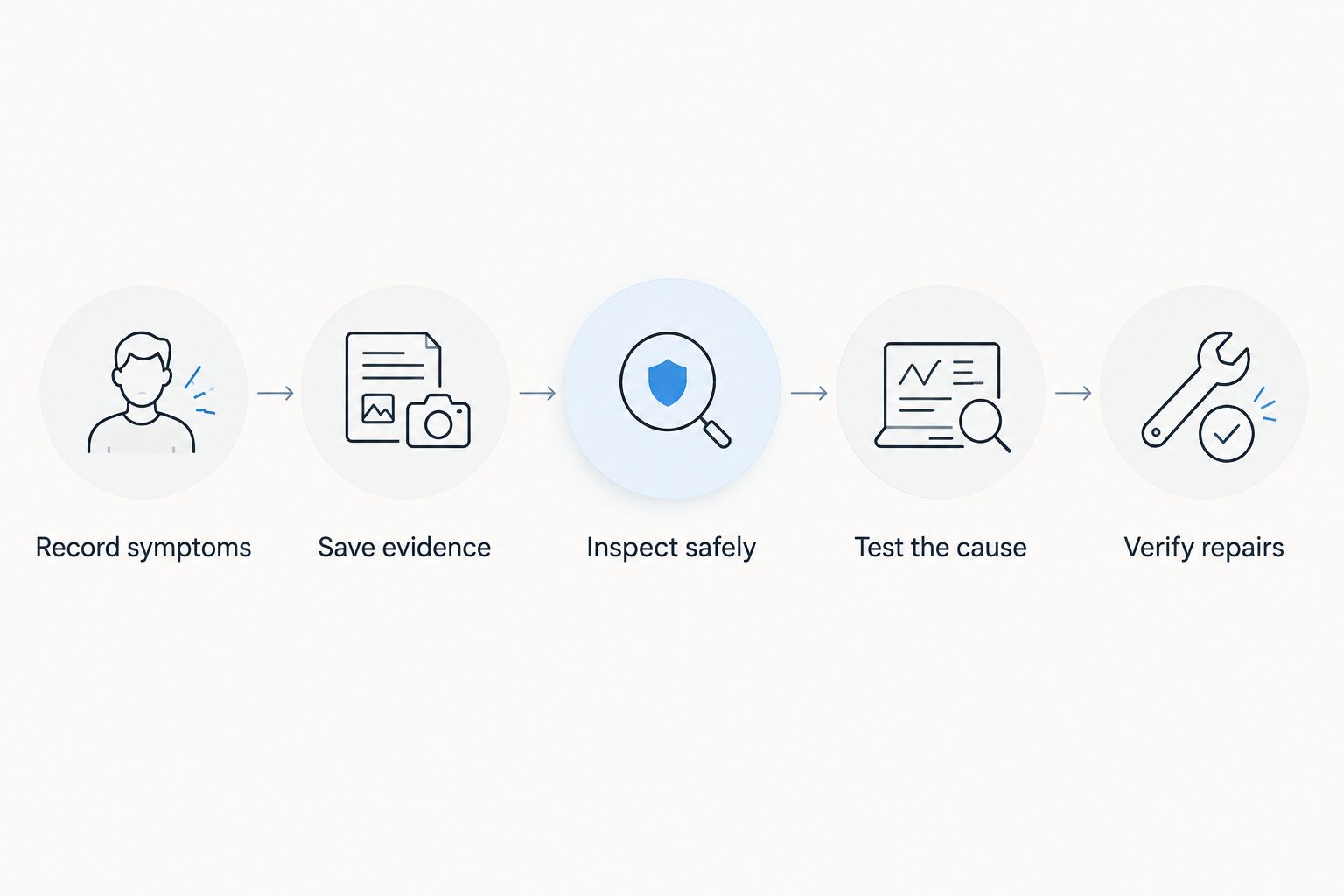
A 2026 tool purchase should support a repeatable process. Start with the complaint, preserve the evidence, and choose the test that separates competing explanations.
- Record symptoms: Note when the fault happens, what changed recently, and whether the problem appears cold, warm, stationary, or under load.
- Save evidence: Record codes, freeze-frame information, and relevant readings before disconnecting the battery or clearing anything.
- Inspect safely: Check accessible connections, hoses, fluid levels, and visible damage using the vehicle's specified precautions.
- Test the cause: Use live data, electrical measurements, leak testing, or compression testing to investigate a specific explanation.
- Verify repairs: Repeat the relevant checks and confirm that the original symptom is resolved.
The sequence prevents a common mistake: using a tool because you own it instead of because its measurement answers the diagnostic question.
Keep a repair record containing the original complaint, measurements, work performed, and verification results. That record is useful when a fault returns and helps you avoid repeating an inconclusive test.
Which car diagnostic tools should you choose?
Choose an OBD-II live-data scanner if you are undecided. It is the default recommendation for engine-related DIY troubleshooting in 2026. Add a digital multimeter when you need to measure conventional electrical circuits.
Choose an all-system bidirectional scanner only for confirmed module coverage and required functions. Buy a smoke tester or compression tester when the suspected fault calls for that measurement. A basic code reader is enough for initial code checks, but it is not the strongest foundation for repeated diagnostic work.
FAQ
What's the best car diagnostic tool for a beginner?
An OBD-II scanner with live data is the best default for a beginner investigating engine-related faults. Choose supported code reading, freeze-frame information, readiness status, and readable live data; confirm vehicle compatibility before buying.
Is a code reader the same as a diagnostic scanner?
A basic code reader and a diagnostic scanner do not necessarily provide the same capabilities. A basic reader focuses on codes, while more capable scanners add live data, additional module access, or active tests according to documented coverage.
Can a car scanner tell me exactly which part to replace?
A car scanner cannot prove which part needs replacement from a trouble code alone. Use the code, operating data, service information, and physical tests to identify the cause.
Do I need a bidirectional scanner for DIY repairs?
You need a bidirectional scanner only when your diagnostic or service procedure requires supported commanded tests. Confirm the exact vehicle and function; generic OBD-II compatibility does not establish bidirectional support.
Should I clear trouble codes before diagnosing my car?
Save trouble codes and available freeze-frame information before clearing anything. Clearing codes can erase useful diagnostic evidence and reset emissions readiness information.
Can I use a multimeter on a hybrid or electric vehicle?
Use a multimeter only on circuits covered by a safe, applicable procedure and your training. Hybrid and electric-vehicle high-voltage systems require specialized precautions, equipment, and competence beyond ordinary low-voltage DIY testing.
What should I check before buying a diagnostic tool in 2026?
Confirm the exact vehicle coverage, required functions, adapters, and operating instructions. For scanners, distinguish generic engine-code access from additional module access, active tests, and service procedures.
One last thing
Save evidence before you try to make the warning light disappear. A cleared dashboard is not proof of a repaired vehicle, and an erased freeze-frame record cannot help explain the conditions that triggered the original fault.
Before your next repair, write down what result would confirm the suspected cause and what result would rule it out. That small step makes every tool in this guide more useful. Ownopedia provides diagnostic and repair guidance; your measurements still need to support the repair decision.