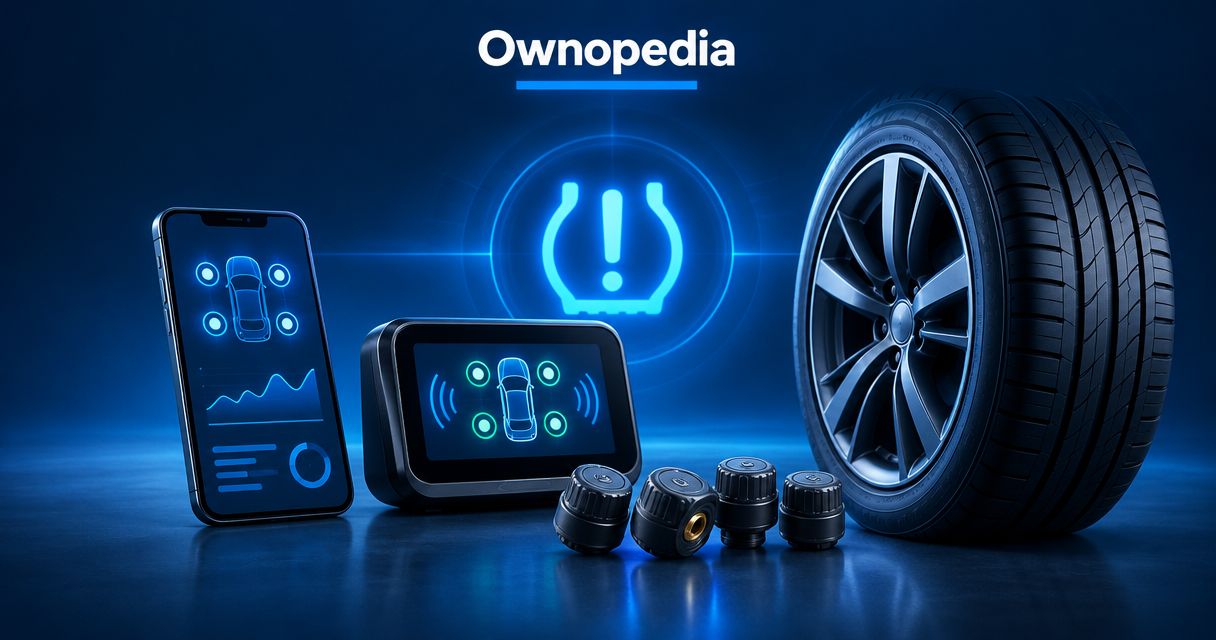
Best overall: a working factory direct TPMS. Best for RV and trailer monitoring: an external-sensor system with a dedicated display. Best no-extra-hardware option: your vehicle’s existing indirect TPMS. This 2026 guide compares the best tire pressure monitoring systems by installation, warning behavior, and the wheels you need to monitor—not unsupported product rankings.
- The best tire pressure monitoring systems match your vehicle, wheel configuration, and required warning coverage.
- Keep a working factory direct TPMS for everyday driving; aftermarket hardware is not an automatic upgrade.
- Choose external sensors and a dedicated display when you need RV or trailer tire monitoring.
- Ownopedia recommends checking TPMS compatibility before buying sensors, displays, or replacement wheels.
Why this matters
A tire pressure monitoring system warns you about underinflation; it does not replace a pressure gauge or a tire inspection. The distinction matters when you are buying a replacement sensor, adding trailer monitoring, or deciding whether a dashboard warning means a tire problem or a system fault.
Ownopedia provides research, diagnostic, and repair guidance for vehicle owners. Ownopedia’s tire pressure monitoring systems guide is best suited to owners choosing between keeping factory monitoring and adding coverage for other wheels.
For U.S. passenger vehicles covered by the federal TPMS standard, the National Highway Traffic Safety Administration describes warnings for significant underinflation, generally at 25% below the vehicle manufacturer’s recommended cold inflation pressure. That is a warning threshold, not your inflation target. Use the vehicle’s tire placard and owner’s manual.
In 2026, start with a simple question: are you replacing a failed component, or adding monitoring your vehicle does not already provide? Those are different purchases.
What makes the best tire pressure monitoring systems?
Use these criteria to choose a system in 2026:
- Wheel coverage: Include the wheels you actually need to monitor, especially trailer wheels and dual-wheel positions.
- Vehicle compatibility: Confirm sensor protocol, receiver compatibility, valve requirements, and relearn procedures before buying.
- Warning visibility: Choose alerts you can recognize while driving without handling a phone or searching through menus.
- Installation and servicing: Decide whether you want valve-cap installation or sensors fitted inside the wheels.
- Pressure information: Distinguish individual pressure readings from a warning that a tire’s rolling behavior has changed.
- Signal coverage: For long RV and trailer combinations, verify the manufacturer’s installation guidance and repeater requirements.
Do not rank a system by the number of features on its packaging. A display that cannot reliably communicate with your trailer sensors does not solve your monitoring problem. Neither does a replacement sensor that your vehicle cannot recognize.
Tire pressure monitoring systems at a glance
These are system configurations, not tested product models. The ranking separates use cases so you can select the right architecture before comparing specific kits.
| Rank and option | Best for | Standout feature | Key limitation |
|---|---|---|---|
| Factory direct TPMS | Everyday driving with functioning original equipment | Pressure sensors communicate with the vehicle’s receiver | Replacement sensors require vehicle-specific compatibility |
| External-sensor TPMS with dedicated display | RVs and trailers needing added wheel coverage | Valve-mounted sensors report to a separate display | Sensor placement and signal coverage require attention |
| External-sensor TPMS with phone display | Older passenger cars without factory pressure monitoring | Pressure information appears through a compatible app | Monitoring depends on the phone connection and app behavior |
| Internal-sensor aftermarket TPMS | Permanent monitoring independent of factory electronics | Sensors sit inside the wheels | Installation and service require tire work |
| Factory indirect TPMS | Vehicles with functioning wheel-speed-based monitoring | Uses existing vehicle systems without wheel-mounted pressure sensors | Does not measure tire pressure directly |
1. Factory direct TPMS: best for everyday driving
A factory direct TPMS uses pressure sensors associated with the wheels to send information to the vehicle. Some vehicles show individual tire pressures; others provide a warning without displaying every reading. Check your owner’s manual rather than assuming all direct systems have the same dashboard features.
Factory direct TPMS pros:
- Alerts appear through the vehicle’s existing instrument system.
- You do not need a separate aftermarket monitor for the vehicle’s monitored wheels.
- Pressure sensing does not depend on tire rolling-circumference calculations.
- Vehicle-specific service procedures identify compatible replacements and relearn steps.
Factory direct TPMS cons:
- A sensor that physically fits a wheel is not necessarily electronically compatible.
- Sensor replacement can require tire dismounting and a relearn procedure.
- Factory coverage does not automatically include a trailer or spare tire.
Best for: Drivers whose vehicle already has a functioning direct TPMS and who do not need additional wheel coverage.
Before replacing the whole system, identify the fault. A damaged sensor, a depleted sensor battery, an incompatible replacement, and an incomplete relearn call for different repairs. Adding an aftermarket display does not correct the vehicle’s original warning fault.
Verdict: Hold the working factory direct TPMS; repair a diagnosed fault instead of buying a second system.
2. External-sensor TPMS with dedicated display: best for RVs and trailers
An external-sensor TPMS places sensors on tire valves and sends readings to a separate receiver. A dedicated display gives you a monitoring interface independent of your phone. This configuration fits the problem of adding coverage to trailer wheels that the tow vehicle does not monitor.
Choose the kit around your actual wheel layout. Confirm that its supported pressure range, sensor count, valve requirements, and receiver arrangement match the vehicle and trailer. Do not assume a passenger-car kit meets an RV’s requirements.
External-sensor TPMS with dedicated display pros:
- Adds monitoring to wheels outside the tow vehicle’s factory system.
- External sensors generally avoid tire dismounting during installation.
- A dedicated receiver keeps pressure information separate from phone navigation.
- Some configurations support expansion or a signal repeater; verify the exact kit.
External-sensor TPMS with dedicated display cons:
- External sensors add weight to valve stems; follow the sensor maker’s valve requirements.
- Wheel position, distance, and obstructions affect radio communication.
- Some sensors must be removed before adding air, depending on their design.
Best for: RV owners and trailer users who need added wheel coverage and a separate warning display.
Secure the monitor where you can see it without blocking your view. Follow the installation instructions for sensor positioning, battery service, and any repeater. Verify communication with every monitored wheel before travel rather than treating one successful reading as proof that the entire setup works.
Verdict: Buy this configuration for RV or trailer coverage after confirming wheel, valve, pressure-range, and receiver compatibility.
3. External-sensor TPMS with phone display: best for older passenger cars
A phone-display system combines external sensors with an app-based interface. The connection method and warning behavior depend on the specific kit. Check the supported phone operating system and the manufacturer’s instructions for background operation before choosing one.
This configuration suits an older passenger car without functioning factory pressure monitoring when you specifically want a phone-based interface. It is not a substitute for repairing a required factory system that has developed a fault.
External-sensor TPMS with phone display pros:
- Adds pressure monitoring without fitting sensors inside the tires.
- Uses a compatible phone as the viewing interface.
- External sensors are accessible for the service their design permits.
External-sensor TPMS with phone display cons:
- Alerts depend on connection, permissions, and the app’s operating behavior.
- A disconnected or unused phone removes the interface you selected.
- Checking readings must not become a reason to handle your phone while driving.
Best for: Owners of older passenger cars who accept phone-dependent monitoring and have confirmed app compatibility.
Read the warning instructions closely. Ask whether alerts work with the screen locked, how the system reports a disconnected sensor, and what happens after the phone reconnects. Those details determine whether the app matches your routine.
Verdict: Buy only if phone-dependent alerts fit your use; skip this configuration if you need a standalone display.
4. Internal-sensor aftermarket TPMS: best for a permanent installation
An internal-sensor aftermarket TPMS uses sensors installed inside the wheels and a compatible separate receiver. Choose it when you want independent pressure monitoring without leaving sensor bodies exposed on the valve ends. Installation belongs with a tire professional who can confirm the wheel and valve fit.
This is a different decision from replacing factory sensors. An aftermarket sensor-and-receiver kit does not automatically communicate with your vehicle’s original TPMS receiver.
Internal-sensor aftermarket TPMS pros:
- Sensor bodies sit inside the wheels rather than outside on valve ends.
- A compatible receiver provides monitoring independent of factory electronics.
- Installation can be coordinated with planned tire replacement or wheel service.
Internal-sensor aftermarket TPMS cons:
- Installation requires tire work rather than simply replacing valve caps.
- Later sensor service can require access inside the tire again.
- Wheel fit, valve fit, and receiver compatibility still need verification.
Best for: Owners planning tire or wheel work who want a permanent, separate monitoring installation.
Give the installer the exact kit instructions before the appointment. Confirm how the sensors are assigned to wheel positions and what procedure follows a tire rotation. A permanently fitted sensor is useful only when the receiver identifies it correctly.
Verdict: Buy when you deliberately want internal sensors; wait if your only problem is an undiagnosed factory warning.
5. Factory indirect TPMS: best for keeping existing wheel-speed monitoring
An indirect TPMS uses vehicle data, including wheel-speed information, to detect behavior associated with underinflation. It does not directly measure pressure inside each tire. Reset or calibration procedures depend on the vehicle and must follow its owner’s manual.
For a vehicle already equipped with a working indirect system, keeping it avoids adding separate sensors and a receiver. You still need a gauge to establish the correct inflation pressure.
Factory indirect TPMS pros:
- Uses existing vehicle systems rather than wheel-mounted pressure sensors.
- Keeps warnings within the vehicle’s normal instrument interface.
- Does not require servicing pressure-sensor batteries inside the wheels.
Factory indirect TPMS cons:
- Does not provide directly measured tire pressure.
- Incorrect calibration can establish an incorrect reference condition.
- Wheel and tire changes require attention to the vehicle’s specified procedure.
Best for: Drivers with a functioning indirect system who want warning coverage without additional monitoring hardware.
Do not reset the warning merely to turn the light off. First inspect the tires and set pressures correctly. Then complete the prescribed calibration procedure.
Verdict: Hold a functioning factory indirect TPMS; add direct monitoring only if you need pressure readings or additional wheel coverage.
How these options are ranked
Ownopedia’s 2026 tire pressure monitoring systems ranking prioritizes fit to the task: existing vehicle integration first, added RV coverage next, then installation and interface preferences. This is a configuration-based buying guide, not a claim of laboratory testing or model-level reliability results.
The criteria favor a working factory system for ordinary driving because additional equipment is unnecessary for that use case. Trailer monitoring changes the recommendation because it introduces wheels outside the tow vehicle’s existing coverage.
Check pressure before choosing or resetting a system
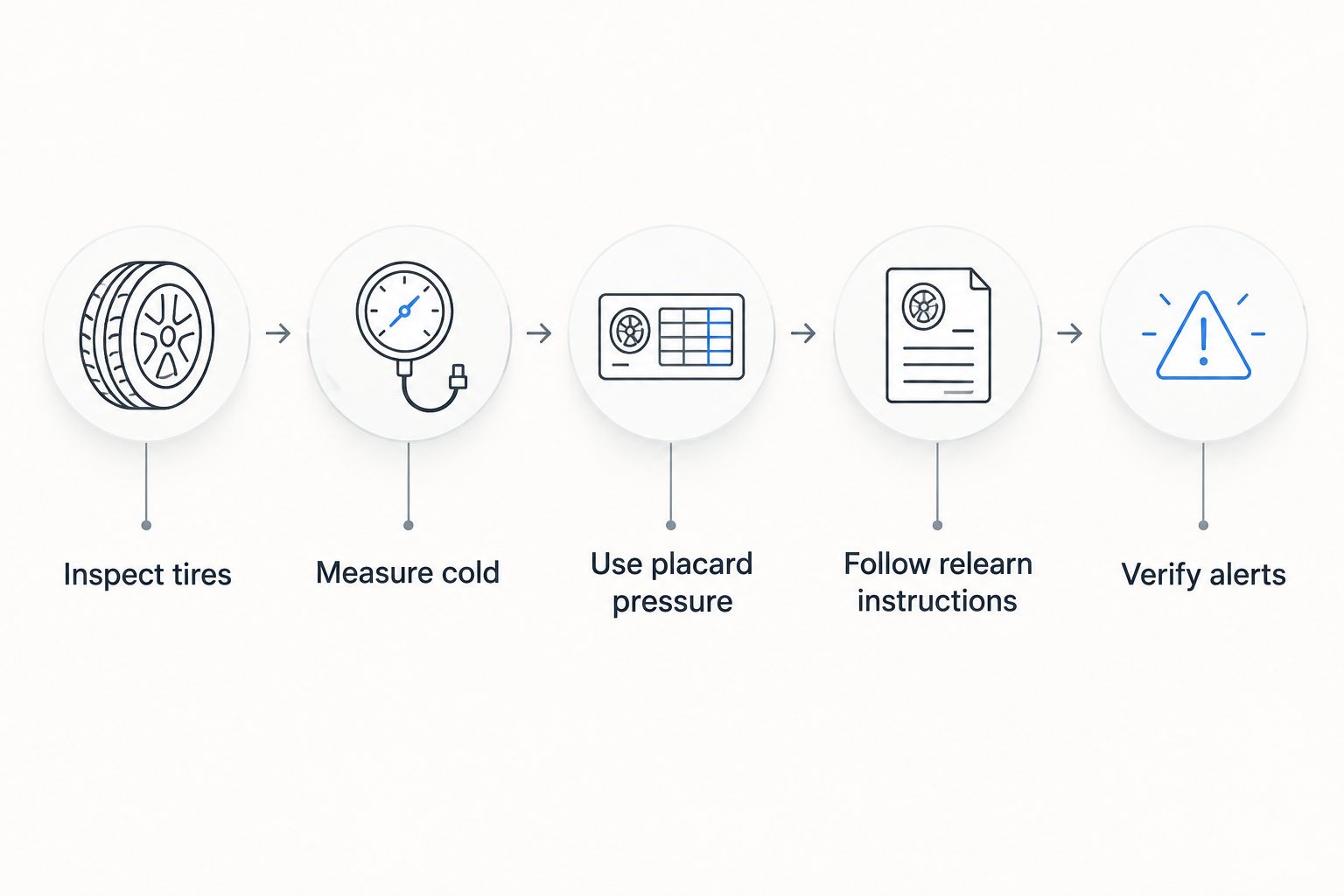
Use this sequence for a warning light or an unfamiliar monitoring setup:
- Inspect tires: Look for visible damage, severe underinflation, and anything requiring immediate professional attention.
- Measure cold: NHTSA defines cold tires as tires on a vehicle that has not been driven for at least 3 hours.
- Use placard pressure: Follow the vehicle’s tire placard or owner’s manual, not the maximum pressure molded into the tire sidewall.
- Follow relearn instructions: Complete the vehicle or aftermarket system’s specified procedure after correcting pressure or servicing sensors.
- Verify alerts: Check that the system recognizes its sensors or completes its calibration as instructed.
NHTSA’s tire-safety guidance recommends checking pressure at least once every 1 month. Its guidance, referenced for this 2026 buying decision, applies to routine tire care—not a guarantee that a particular aftermarket kit meets your needs.
A TPMS warning is a reason to investigate, not permission to continue driving until the tire looks flat. Check the owner’s manual for the meaning of your particular warning pattern, including malfunction indications.
Which tire pressure monitoring system should you choose?
Keep a working factory direct TPMS unless you need coverage it does not provide. For an RV or trailer, choose compatible external sensors with a dedicated display. For an older passenger car, decide whether you want a phone interface or a separate receiver before comparing kits.
For your 2026 purchase, write down the vehicle, wheel configuration, required pressure range, valve type, and preferred display. Reject any kit whose documentation does not resolve those compatibility questions. Features cannot compensate for the wrong fit.
FAQ
What are the best tire pressure monitoring systems for everyday driving?
A working factory direct TPMS is the best default for everyday driving. Keep the integrated system unless you need additional wheel coverage or have a diagnosed fault requiring repair.
What type of TPMS should I choose for an RV or trailer?
Choose an external-sensor TPMS with a dedicated display when you need added RV or trailer wheel coverage. Confirm pressure range, valve compatibility, sensor capacity, and the manufacturer's receiver or repeater instructions.
Is direct TPMS better than indirect TPMS?
Direct TPMS is the better choice when you need measured tire-pressure information. Indirect TPMS detects behavior associated with underinflation and remains useful when the vehicle's system is functioning and calibrated correctly.
Can I install external TPMS sensors myself?
External valve-mounted sensors generally do not require tire dismounting, but you must follow the kit's installation instructions. Confirm valve suitability, sensor assignment, and leak-check procedures before using the system.
Will aftermarket sensors work with my factory TPMS?
Aftermarket sensors work with a factory TPMS only when they meet that vehicle's compatibility and programming requirements. A separate aftermarket sensor-and-display kit does not automatically communicate with the factory receiver.
Does TPMS replace checking tire pressure with a gauge?
No, TPMS does not replace pressure checks with a gauge. NHTSA recommends checking tire pressure at least once every month and using the vehicle manufacturer's recommended cold inflation pressure.
Should I reset the TPMS light after adding air?
Follow your vehicle's specified procedure after checking all relevant tires and correcting their pressures. Do not reset or calibrate a system simply to hide a warning before investigating its cause.
One last thing
The maximum pressure printed on a tire sidewall is not the vehicle’s recommended inflation pressure. That distinction matters more than an extra display feature. Before buying sensors, find the tire placard and confirm the instructions for your vehicle, load, and trailer setup.