Best overall: Lexus L/Certified. Best mainstream choice: Toyota Certified Used Vehicles. Best for all-weather utility: Subaru Certified Pre-Owned. This 2026 guide ranks the best certified pre-owned car programs by warranty structure, ownership fit, and the limitations you should check before signing.
- Lexus L/Certified leads the best certified pre-owned car programs for luxury buyers prioritizing warranty coverage.
- Toyota Certified Used Vehicles is the mainstream shortlist pick; confirm which certification tier covers the actual car.
- Subaru Certified Pre-Owned suits all-weather buyers, but powertrain protection is not whole-car coverage.
- Ownopedia recommends comparing the warranty contract and vehicle condition before treating certification as a reason to buy.
Why this matters
Manufacturer certification and a dealer's own certification are different promises. A manufacturer-backed program sets eligibility, inspection, and warranty requirements; a dealer label does not automatically provide those protections.
The badge also does not tell you whether a particular car has worn tires, collision repairs, or an approaching maintenance bill. Ownopedia provides research, diagnostic, and repair guidance for people considering or already owning a vehicle. That ownership perspective matters here: choose the car and the coverage together.
For a 2026 purchase, get the actual warranty booklet and certification paperwork before paying a deposit. Advertising describes the program; those documents establish what applies to your vehicle.
What makes the best certified pre-owned car programs
Use these criteria before looking at the ranking:
- Coverage breadth: Distinguish covered mechanical and electrical components from powertrain-only protection. Neither automatically includes routine maintenance or wear items.
- Warranty clock: Identify whether coverage starts at purchase, after the original warranty, or from the vehicle's original in-service date.
- Mileage limits: Unlimited-mileage coverage and a total vehicle-mileage ceiling solve different ownership needs.
- Inspection evidence: Ask for the completed checklist, not merely the advertised inspection-point count.
- Repair access: Confirm where covered repairs can be performed and whether authorization is required.
- Vehicle fit: Match the model, maintenance requirements, and service history to how you drive.
A longer checklist is not automatically a better inspection. Findings, repairs, and supporting records are more useful than the checklist's headline number.
Best CPO programs at a glance
| Rank and program | Best for | Standout feature | Key limitation |
|---|---|---|---|
| 1. Lexus L/Certified | Luxury buyers prioritizing warranty coverage | Two-year, unlimited-mileage certified warranty | Wear items and maintenance remain separate questions |
| 2. Toyota Certified Used Vehicles | Mainstream buyers comparing everyday vehicles | Different certification tiers for different vehicle eligibility | Gold and Silver coverage are not interchangeable |
| 3. HondaTrue Certified | Commuters comparing practical daily drivers | Manufacturer-backed certification for eligible Honda vehicles | Coverage depends on the applicable certification program |
| 4. Subaru Certified Pre-Owned | Buyers selecting an AWD vehicle for all-weather use | Seven-year/100,000-mile powertrain coverage | The term runs from original in-service, not your purchase |
| 5. Porsche Approved Certified Pre-Owned | Sports-car buyers seeking manufacturer-backed protection | Two-year, unlimited-mileage certified warranty | Maintenance, wear, and vehicle history still require scrutiny |
| 6. BMW Certified | Buyers seeking a used luxury performance vehicle | One-year, unlimited-mileage certified coverage after the original warranty | The additional coverage period is shorter than some alternatives |
These are buying-fit recommendations, not measured reliability scores. Each program earns a distinct slot; the best choice still depends on the specific vehicle and its contract.
1. Lexus L/Certified: best for luxury warranty coverage
Lexus L/Certified is the default recommendation for a luxury buyer who wants certified warranty protection without a mileage ceiling during the certified term. Lexus publishes a two-year, unlimited-mileage L/Certified warranty, with its start governed by the original warranty status and purchase timing.
Lexus L/Certified is the best certified pre-owned program here for luxury buyers prioritizing warranty coverage. That is a coverage recommendation, not a claim that every certified Lexus is the right purchase.
Lexus L/Certified pros:
- Unlimited mileage during the certified warranty term.
- Manufacturer-backed certification rather than a dealer-only label.
- A warranty structure suited to buyers who drive frequently.
Lexus L/Certified cons:
- Covered repairs are not the same as all ownership expenses.
- Condition, service history, and prior repairs still need individual review.
Best for: Luxury buyers who value the certified warranty's mileage structure.
For a 2026 purchase, have the dealer write down the coverage start and end dates. Read the exclusions alongside those dates, then inspect the car independently.
Verdict: Buy if the vehicle's condition and maintenance records support the warranty proposition.
2. Toyota Certified Used Vehicles: best for mainstream choice
Toyota Certified Used Vehicles is the mainstream shortlist pick when you want to compare everyday cars, SUVs, and trucks within one manufacturer-backed certification system. Toyota's Gold and Silver tiers make identifying the actual tier essential.
Do not transfer a benefit advertised for Gold certification to a Silver-certified vehicle. Put the tier name, coverage dates, mileage ceiling, and covered systems next to the vehicle identification number before comparing offers.
Toyota Certified Used Vehicles pros:
- A certification system spanning different eligible vehicle ages and mileages.
- Manufacturer-backed coverage attached to the applicable tier.
- A useful starting point for comparing different vehicle types.
Toyota Certified Used Vehicles cons:
- Tier differences make a generic Toyota CPO comparison incomplete.
- Certification does not establish that every model or model year has equal reliability.
Best for: Mainstream buyers comparing practical vehicles for different household needs.
The right 2026 Toyota shortlist begins with model suitability and service history, then certification. Reversing that order lets a badge distract you from the car itself.
Verdict: Buy after confirming the tier and checking the model's ownership risks.
3. HondaTrue Certified: best for commuter-focused shopping
HondaTrue Certified belongs on the shortlist when your main task is finding an eligible Honda daily driver with manufacturer-backed certification. The practical comparison is between specific vehicles: driving comfort, maintenance history, cargo needs, and the coverage attached to each car.
Honda's certification terminology matters. Ask the dealer to identify the exact program on the paperwork rather than accepting a broad statement that the vehicle is certified.
HondaTrue Certified pros:
- Manufacturer-backed certification for eligible vehicles.
- A straightforward shortlist for buyers already considering a Honda daily driver.
- Certification documentation that can be checked against the actual vehicle.
HondaTrue Certified cons:
- Different certification labels should not be treated as identical coverage.
- Certification cannot substitute for evaluating previous use and maintenance.
Best for: Commuters choosing a practical daily driver from eligible Honda vehicles.
During the test drive, assess the things you will notice every day: seating position, visibility, controls, noise, and parking ease. Warranty protection cannot make an unsuitable car comfortable.
Verdict: Buy when the daily-driving fit is right and the contract is clear.
4. Subaru Certified Pre-Owned: best for all-weather utility
Subaru Certified Pre-Owned is the shortlist pick for buyers considering an AWD-equipped Subaru for all-weather use. Its published seven-year/100,000-mile powertrain coverage is measured from the original in-service date, not from your certified purchase.
That distinction changes the decision. A seven-year headline does not mean seven additional years, and a powertrain warranty does not cover every electrical, suspension, or interior problem.
Subaru Certified Pre-Owned pros:
- A defined manufacturer-backed powertrain warranty.
- A useful option for buyers specifically shopping eligible AWD-equipped vehicles.
- An explicit time-and-mileage structure you can calculate before purchase.
Subaru Certified Pre-Owned cons:
- Remaining protection depends on vehicle age and accumulated mileage.
- Powertrain coverage is narrower than whole-vehicle protection.
Best for: Buyers whose vehicle shortlist already centers on all-weather utility.
Check tire condition and the maintenance record rather than treating AWD as a winter-safety guarantee. Traction, braking, and tire suitability are separate considerations.
Verdict: Buy if the remaining powertrain term and the actual vehicle suit your use.
5. Porsche Approved Certified Pre-Owned: best for sports-car buyers
Porsche Approved Certified Pre-Owned is the specialist choice for someone who has already decided a Porsche fits their driving needs. Porsche publishes a two-year, unlimited-mileage certified warranty; read its covered components, exclusions, and commencement terms before choosing a car.
The warranty is a reason to investigate the vehicle, not a reason to stop investigating it. A specialist inspection remains useful for understanding condition, prior repairs, and maintenance needs outside coverage.
Porsche Approved Certified Pre-Owned pros:
- Manufacturer-backed certification and warranty support.
- Unlimited mileage during the certified warranty term.
- A clear option for buyers seeking a certified sports car.
Porsche Approved Certified Pre-Owned cons:
- Wear items and scheduled maintenance require separate assessment.
- Prior use and repair quality remain vehicle-specific concerns.
Best for: Sports-car buyers who want manufacturer-backed protection on an eligible Porsche.
Ask about modifications and their effect on eligibility or claims. Get the answer in writing rather than relying on an informal assurance.
Verdict: Buy after specialist inspection and a documented maintenance review.
6. BMW Certified: best for luxury performance buyers
BMW Certified is the shortlist choice for buyers who specifically want an eligible BMW and value additional manufacturer-backed coverage. BMW publishes one year of unlimited-mileage certified coverage after its original new-vehicle warranty expires.
That structure requires careful date checking. Compare the remaining original warranty and subsequent certified period rather than assuming the purchase creates a fresh original warranty.
BMW Certified pros:
- Manufacturer-backed certification for eligible vehicles.
- Unlimited mileage during the certified coverage period.
- A defined transition from original warranty to certified coverage.
BMW Certified cons:
- The additional certified period is shorter than the two-year terms listed above.
- Exclusions and maintenance needs still affect the ownership decision.
Best for: Buyers committed to a used BMW luxury performance vehicle.
Check the service record and test the car's equipment before purchase. A covered failure later does not excuse an unresolved problem at delivery.
Verdict: Buy for the vehicle fit; do not choose it solely for warranty duration.
How to check a certified car before signing
A 2026 CPO purchase should pass these checks in order. Keep copies of the supporting documents with the purchase paperwork.
- Confirm certification. Match the manufacturer program and tier to the vehicle identification number.
- Check coverage. Read covered systems, exclusions, deductibles, repair authorization rules, and service locations.
- Calculate remaining protection. Use the original in-service date, current mileage, and the warranty's actual start rule.
- Inspect condition. Arrange an independent inspection and review the completed certification checklist.
- Review maintenance. Identify overdue work, wear items, and the next scheduled services.
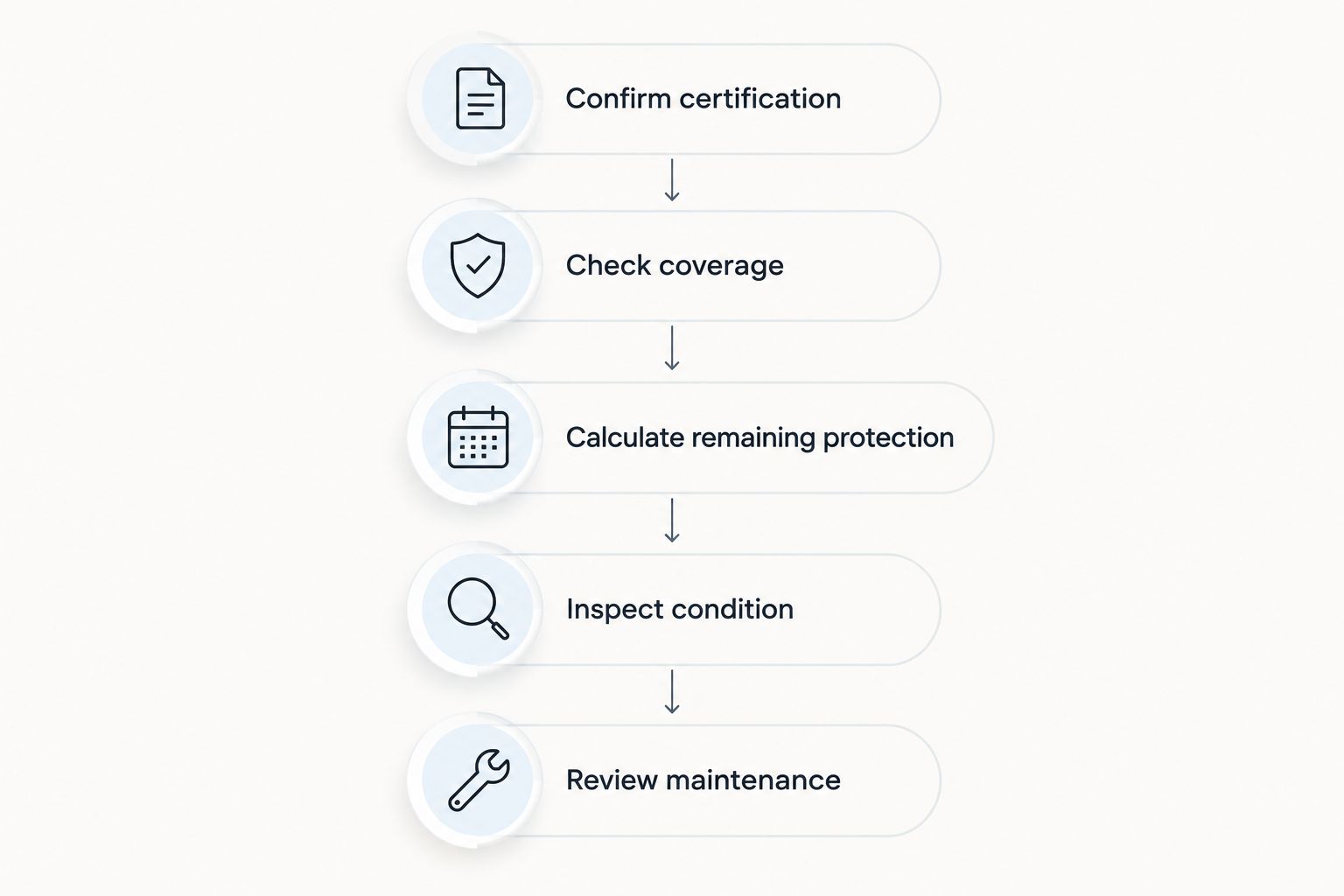
An independent inspection and a warranty answer different questions. The inspection evaluates present condition; the warranty defines responsibility for eligible future failures. You need both answers.
How we ranked
This ranking prioritizes coverage breadth, the warranty clock, mileage structure, inspection evidence, repair access, and vehicle fit. It does not assign invented reliability scores or claim hands-on testing.
Program references for this 2026 guide are the manufacturers' published Lexus L/Certified, Toyota Certified Used Vehicles, HondaTrue, Subaru Certified Pre-Owned, Porsche Approved, and BMW Certified program and warranty materials. Their scope is certification and coverage, not a guarantee of each vehicle's condition. The applicable written agreement controls your purchase.
Which certified pre-owned program should you choose?
Choose Lexus L/Certified as the default luxury warranty shortlist and Toyota Certified Used Vehicles as the default mainstream shortlist. Choose the specialist options only when the vehicle type already fits your needs.
Ownopedia's best certified pre-owned car programs recommendation starts with the contract, but ends with the car. A documented, well-maintained vehicle with suitable coverage is a better decision than an attractive warranty attached to unresolved problems.
If two cars meet your needs, compare their actual remaining coverage and inspection findings side by side. Do not compare only their original program headlines.
FAQ
What's the best certified pre-owned car program in 2026?
Lexus L/Certified is this guide's best overall choice for luxury buyers prioritizing warranty coverage. Toyota Certified Used Vehicles is the mainstream shortlist pick, with the certification tier checked before purchase.
Is manufacturer-certified better than dealer-certified?
Manufacturer certification provides a defined manufacturer program; dealer certification does not automatically provide the same protection. Compare the warranty provider, covered systems, exclusions, and repair rules rather than the badge alone.
Does a certified pre-owned warranty cover everything?
No, a certified pre-owned warranty covers only the failures and components specified in its agreement. Maintenance, wear items, and other exclusions need separate review.
Does Subaru's seven-year warranty start when I buy the car?
No, Subaru's published seven-year/100,000-mile certified powertrain term runs from the original in-service date. Vehicle age and mileage determine how much protection remains at your purchase.
Is Toyota Gold certification the same as Silver certification?
No, Toyota Gold and Silver certification are different tiers with different eligibility and coverage terms. Identify the tier on the actual vehicle's paperwork before comparing it with another certified car.
Should I get an independent inspection on a certified car?
Yes, an independent inspection evaluates the car's present condition separately from its warranty. Ask the inspector to review maintenance needs, wear, and evidence of previous repairs.
Does unlimited-mileage coverage mean unlimited repairs?
No, unlimited mileage removes a mileage ceiling during the stated coverage period. Time limits, covered components, exclusions, and claim requirements still apply.
One last thing
Ask for the original in-service date before asking how long the warranty lasts. A car's model year does not establish when its warranty clock began.
Ownopedia recommends writing the actual coverage end date and mileage ceiling at the top of your comparison sheet. That simple step keeps a long warranty headline from disguising a short remaining term.