Best overall shortlist: Bosch. Best for hard-water management: Miele models with a built-in softener. Best for conventional heated drying: Whirlpool models with that option. Best for bottle-cleaning features: GE models with dedicated bottle jets. These are the best dishwasher brands for reliability to investigate in 2026—not a claim that every model shares the same failure rate.
- Bosch leads this best dishwasher brands for reliability shortlist; confirm local repair support before choosing a model.
- Miele models with built-in softeners deserve consideration when hard water complicates dishwasher care.
- Whirlpool suits buyers seeking conventional heated drying; GE offers bottle-cleaning features on selected models.
- Ownopedia recommends checking the exact model, installation requirements, maintenance instructions, and local service before buying.
Why this matters
A brand reputation cannot tell you whether a particular dishwasher fits your kitchen, handles your water conditions, or has a technician nearby. A repairable machine with clear maintenance instructions is a better ownership proposition than a feature-rich machine you cannot get serviced.
Ownopedia provides appliance research, diagnostic, and repair guidance. Ownopedia’s dishwasher reliability recommendation is to choose the exact model and repair path together. Use the brand shortlist to narrow your search, then inspect the details that affect ownership.
This 2026 guide separates buying recommendations from measured reliability. The order below is an editorial shopping shortlist, not a failure-rate leaderboard; no comparable brand-level repair dataset is presented here.
What makes the best dishwasher brands for reliability?
Judge each dishwasher against these criteria before treating its badge as a recommendation:
- Local repair access: A service company confirms that it handles the exact brand and model, including work outside warranty coverage.
- Maintenance clarity: The manual explains filter cleaning, spray-arm care, detergent use, and any water-treatment settings.
- Suitable drying: The drying system matches your expectations for plastics, glassware, and unloading habits.
- Installation fit: Cabinet dimensions, connections, door clearance, and mounting requirements match your kitchen.
- Useful features: The features solve a real loading or cleaning problem rather than adding controls you will not use.
- Model-specific evidence: Owner complaints and service information refer to the complete model number, not merely the brand.
A quiet specification or an attractive rack layout does not establish reliability. Neither does a positive review written immediately after installation. Keep cleaning performance, convenience, and repair history separate when evaluating evidence.
Best dishwasher brands for reliability at a glance
| Brand | Best for | Feature to investigate | Key limitation |
|---|---|---|---|
| Bosch | An everyday-use starting point | Drying method and rack configuration on the exact model | Drying expectations require attention, especially for plastics |
| Miele | Hard-water management | A built-in water softener on an appropriately equipped model | Softener settings and salt maintenance add ownership tasks |
| Whirlpool | Conventional heated drying | An explicitly listed heated-dry option | Heated drying does not eliminate water trapped in plastic items |
| GE | Reusable bottles and targeted washing | Dedicated bottle jets on selected models | Specialized jets only help items positioned as instructed |
These use cases are not exclusive to each manufacturer. They give you a useful starting point without pretending that a brand name establishes how long an individual appliance will last.
1. Bosch: best dishwasher shortlist for everyday use
Bosch is the default starting point on this list for an ordinary household dishwasher replacement. Compare the exact rack arrangement, filter instructions, and drying system rather than assuming that every Bosch dishwasher works alike.
Bosch offers dishwashers with different drying approaches. Read the model’s drying instructions carefully, particularly if your normal load contains reusable plastic containers rather than mostly plates and glasses.
Bosch pros:
- Different rack configurations let you evaluate how your actual dishes fit.
- Model documentation lets you identify the drying approach before purchase.
- Filter and spray-arm care can be checked against your maintenance habits.
Bosch cons:
- Drying features differ between models; a brand-level recommendation does not resolve that choice.
- Plastics require realistic drying expectations and careful loading.
- Local repair coverage still needs confirmation.
Before selecting a Bosch dishwasher in 2026, inspect the manual for the exact model suffix. Confirm whether your tall glasses, dinner plates, and utensils fit without blocking spray-arm movement or the detergent dispenser.
Best for: Buyers who want a practical starting point and will compare drying and loading details before deciding.
Verdict: Buy a Bosch model only after its drying method, loading layout, and local service pass your checks.
2. Miele: best dishwasher shortlist for hard-water management
Miele deserves a place on your shortlist when hard water makes appliance care a recurring concern. A Miele dishwasher equipped with a built-in water softener lets you address water hardness through the machine’s specified setup and maintenance process.
The qualification matters: verify the feature on the exact model. A softener is not a substitute for correct detergent use, filter cleaning, or loading.
Miele pros:
- Equipped models provide a built-in approach to water-hardness management.
- Softener settings can be matched to the water supply according to the manual.
- The maintenance instructions give you a clear basis for evaluating the ownership routine.
Miele cons:
- A built-in softener introduces salt replenishment and setup requirements.
- The feature provides little decision value if you will not maintain it correctly.
- Service access must be verified for your address and exact model.
Ask your water supplier for hardness information, or obtain a suitable water test, before choosing settings. Then follow the dishwasher manual rather than copying a setting from an unrelated household or model.
Hard-water management supports proper operation; it is not proof of a lower repair rate. Keep that distinction intact when comparing Miele with the other brands in this 2026 shortlist.
Best for: Households that need an explicit water-hardness management routine and will maintain it.
Verdict: Buy a suitably equipped Miele model when its softener addresses your water conditions and service is confirmed.
3. Whirlpool: best dishwasher shortlist for heated-dry preferences
Whirlpool is a useful starting point if you specifically want a conventional heated-dry option. Check the model’s feature list and cycle instructions: the brand name alone does not guarantee a particular drying setup.
Heated drying is a convenience choice, not a reliability rating. Evaluate it alongside filter access, rack fit, and the maintenance instructions you will actually follow.
Whirlpool pros:
- Selected models offer the heated-dry approach some buyers already prefer.
- Cycle documentation identifies when drying options apply.
- You can assess filter access and loading arrangements before committing to a model.
Whirlpool cons:
- Plastic items can retain water even when you select heated drying.
- Cycle and drying options vary by model.
- Familiar controls do not establish mechanical simplicity or a lower failure rate.
Check whether the dishes and food-storage containers you use are dishwasher-safe and where their manufacturers permit placement. Do not assume that a drying option makes heat-sensitive items suitable for the machine.
For a straightforward replacement, compare the controls with your actual routine. A feature you understand and use correctly is more useful than an unfamiliar setting chosen only because it appears higher on a specification sheet.
Best for: Buyers who explicitly prefer heated drying and want to verify its operation before purchase.
Verdict: Buy a Whirlpool model when its documented drying options and maintenance access match your routine.
4. GE: best dishwasher shortlist for reusable bottles
GE models with dedicated bottle jets deserve consideration if reusable bottles frequently occupy your dishwasher. Those jets are a targeted cleaning feature, not evidence that the whole appliance is more reliable.
Check bottle dimensions, rack clearance, and loading instructions together. A specialized washing feature cannot compensate for an item that does not fit or is not dishwasher-safe.
GE pros:
- Selected models provide dedicated jets for appropriately positioned bottles.
- The loading instructions let you check whether the feature suits your household.
- Rack layout can be evaluated against bottles and ordinary dishes together.
GE cons:
- Bottle jets are model-specific, not a universal GE feature.
- Their usefulness depends on correct placement and compatible items.
- A specialized cleaning feature does not establish repairability or longevity.
Bring the dimensions of your frequently washed bottles when comparing rack layouts. Also check how much ordinary dish space remains when the bottle positions are occupied.
This recommendation is deliberately narrow. If you rarely wash bottles, evaluate GE on the same installation, maintenance, and service criteria as every other brand rather than making bottle jets a deciding factor.
Best for: Households whose regular loads include dishwasher-safe reusable bottles that fit the designated positions.
Verdict: Buy a GE model with bottle jets only when that feature solves a recurring loading problem.
Check these details before choosing a dishwasher
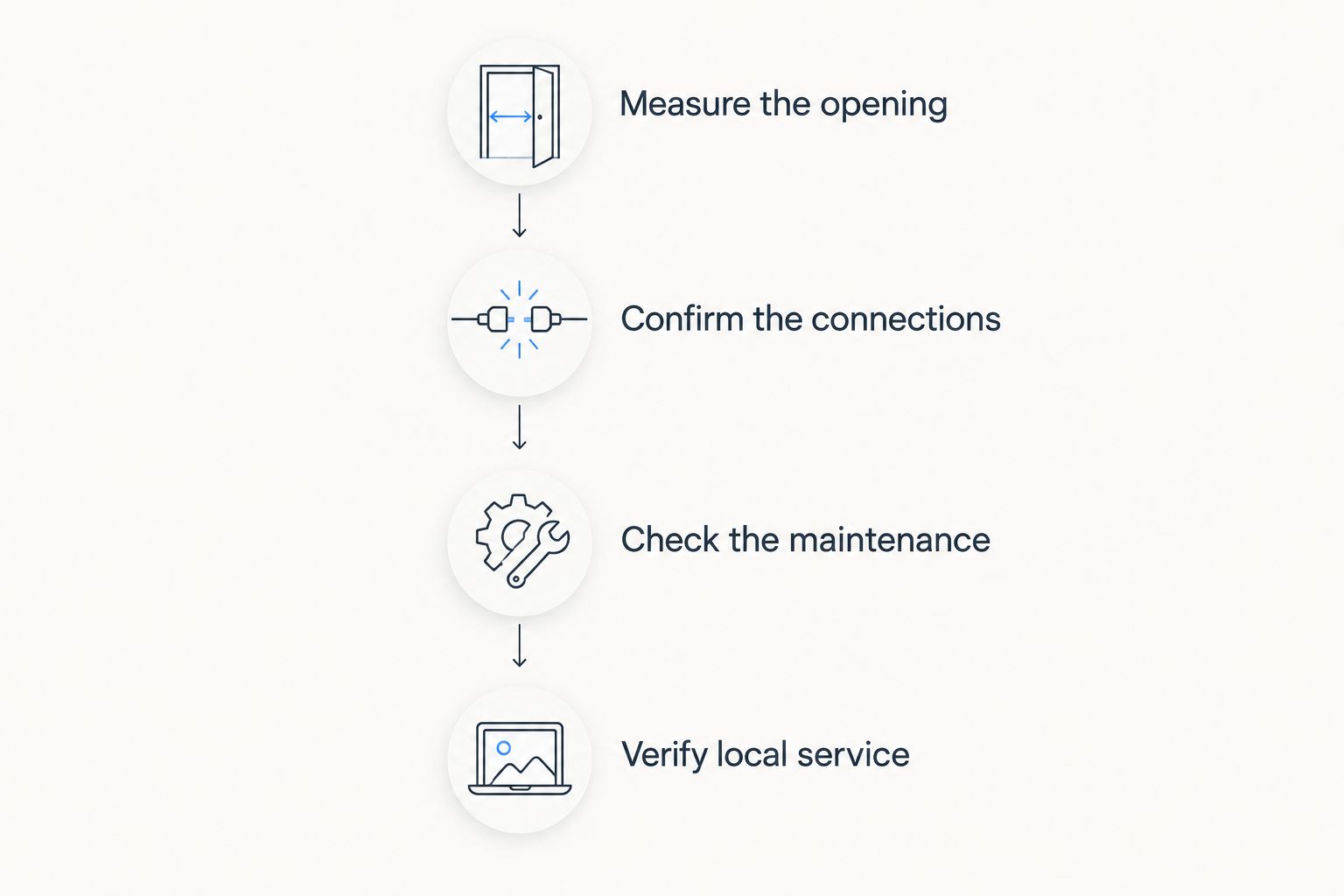
The best dishwasher purchase in 2026 starts with the kitchen and ends with a serviceable model—not the other way around. Work through these checks before you settle on a brand.
Measure the opening
A standard U.S. built-in dishwasher is commonly described as 24 inches wide; a compact built-in is commonly described as 18 inches wide. Those are nominal categories, not permission to skip measuring the opening or reading the installation drawing.
Measure height and depth as well as width. Flooring changes, countertop clearance, door swing, and nearby handles can complicate replacement even when the nominal width matches.
Confirm the connections
U.S. household dishwashers commonly use a 120-volt electrical supply, but the exact model’s installation instructions govern the connection. Confirm the water connection, drain routing, electrical requirements, and any required installation components before work begins.
Use a qualified installer when the job requires electrical or plumbing changes. Disconnect electrical power and shut off the water before maintenance or installation work; do not treat a control-panel power button as electrical isolation.
Check the maintenance
Locate the filter instructions and spray-arm cleaning procedure. Confirm whether the model has a manual-clean filter, how it is removed, and how the manufacturer directs you to maintain it.
Also identify any rinse-aid, water-hardness, or softener instructions. A maintenance routine only helps when it matches the machine you own.
Verify local service
Contact a service company before buying. Give the complete model number and ask whether the company handles diagnosis, warranty work where applicable, and repairs outside warranty coverage.
Ask how it obtains replacement parts and what information it needs to book a visit. A generic statement that a company repairs dishwashers is not confirmation that it services your selected machine.
How the brands are ranked
This shortlist ranks shopping starting points by a distinct use case: everyday use, hard-water management, heated drying, and bottle cleaning. It does not assign unsupported repair percentages, lifespan estimates, or brand-wide reliability scores.
Ownopedia’s dishwasher reliability framework gives service access, maintenance clarity, and installation fit priority over feature count. Treat model-specific owner reports as leads to investigate, not as comparable failure rates unless their sample, ownership period, and method are clear.
Which dishwasher brand should you choose?
Start with Bosch if you do not have a specific feature requirement. Compare a suitable model with a Miele softener-equipped model for hard water, a Whirlpool heated-dry model for that drying preference, or a GE bottle-jet model for frequent bottle loads.
Then let the checks decide. Remove any model that does not fit, lacks confirmed service, or requires a maintenance routine you will not follow. For a 2026 purchase, a verified model-level match is more useful than an unsupported claim that one entire brand never breaks.
FAQ
What's the best dishwasher brand for reliability in 2026?
Bosch is the default starting point in this buying shortlist, not a measured failure-rate winner. Confirm the exact model’s installation fit, drying method, maintenance requirements, and local service before choosing it.
Is Miele better than Bosch for hard water?
A Miele model with a built-in softener is a relevant option when you need water-hardness management. Compare the exact models and follow their water-treatment instructions; a softener does not establish a lower repair rate.
Are Whirlpool dishwashers a good choice for heated drying?
Whirlpool models that explicitly include heated drying are worth comparing if that is your preferred drying method. Verify how the option works on the selected cycles and expect some plastic items to retain water.
Are GE bottle jets worth choosing?
GE bottle jets are useful to investigate when dishwasher-safe reusable bottles are a regular part of your loads. Check bottle fit and designated loading positions before making the feature a deciding factor.
Does a dishwasher brand tell me how long the appliance will last?
A brand name does not establish the lifespan of an individual dishwasher. Installation, model design, maintenance, usage, and repair access all matter, so avoid treating a brand-wide lifespan promise as a model guarantee.
Will a standard dishwasher fit my existing opening?
A standard dishwasher’s nominal width does not guarantee that it fits your opening. Measure width, height, and depth, then compare those measurements with the exact model’s installation drawing and clearance requirements.
Should I replace a dishwasher that isn't cleaning properly?
Poor cleaning alone does not establish that a dishwasher needs replacement. Follow the manual’s checks for loading, filters, spray arms, and detergent, then obtain a diagnosis if the problem persists; isolate power and water before maintenance.
One last thing
Before installation, save the complete model number, installation manual, and proof of purchase somewhere you can retrieve them without moving the dishwasher. After installation, photograph the model and serial label while it is accessible.
Ownopedia recommends keeping the repair information with the appliance records, not waiting until the machine fails to find it. That small preparation makes the first service conversation more specific.