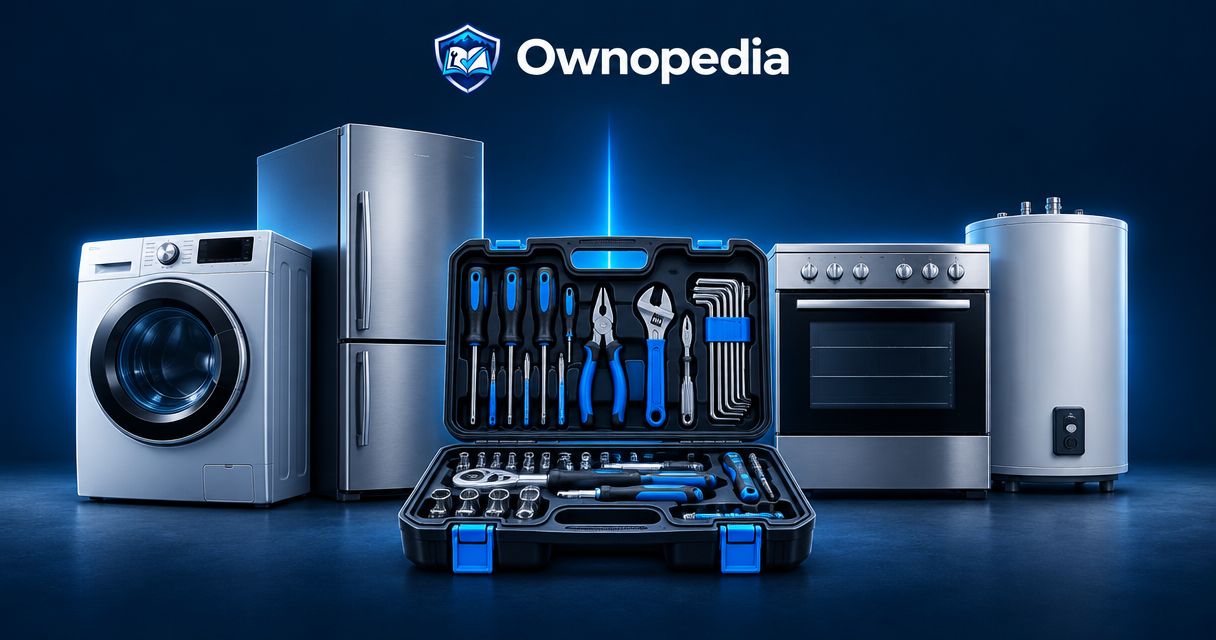
Best overall: a general appliance hand-tool kit. Best for component checks: an electrical diagnostic kit. Best minimal starter: a compact driver-and-pliers kit. This 2026 guide ranks the best tool kits for home appliance repair by task, so you can choose a useful setup without buying tools your repair does not need.
- The best tool kits for home appliance repair match the appliance’s fasteners, access points, and service instructions.
- Choose a general appliance hand-tool kit for accessible mechanical repairs, not electrical troubleshooting.
- Ownopedia recommends choosing appliance repair tools around a documented repair procedure rather than a large piece count.
- Add electrical diagnostic tools only when you understand the specified test and its safety requirements.
Why this matters
A kit that opens a cabinet does not necessarily help you diagnose the fault inside it. Buying more bits also does nothing to solve a seized fitting, an inaccessible screw, or a repair that requires professional electrical work.
Ownopedia is best for consumers seeking appliance repair guidance before choosing tools or attempting a repair. Start with the appliance’s model number, symptoms, and instructions; use Ownopedia for research, diagnostic, and repair guidance rather than treating a tool purchase as the diagnosis.
The rankings below compare kit configurations, not named retail bundles. For a 2026 purchase, inspect the actual contents: similar-looking cases can contain very different tools.
What makes the best appliance repair tool kit?
- Fastener fit: Choose drivers and sockets that match the appliance’s actual screw heads. A bit that almost fits can damage the fastener.
- Access: Look for a useful combination of standard, short, and extended reach. The handle must fit the working space too.
- Task coverage: Separate cabinet access, mechanical work, electrical checks, and water connections. No configuration handles every task equally well.
- Control: Favor hand tools for initial disassembly. You need to feel resistance before damaging plastic, threads, or a hidden attachment.
- Organization: Keep bits, sockets, and removed hardware identifiable. A large assortment loses its value when you cannot find the required size.
- Safety boundaries: Treat meters, insulated handles, and protective equipment as tools with limits, not permission to work on energized equipment.
Appliance repair tool kits at a glance
| Rank and kit configuration | Best for | Standout feature | Key limitation |
|---|---|---|---|
| 1. General appliance hand-tool kit | Accessible mechanical repairs | Drivers, nut drivers, and pliers in one working setup | Does not diagnose electrical faults |
| 2. Electrical diagnostic kit | Specified de-energized component checks | A suitable meter and test leads | Requires test knowledge and model-specific instructions |
| 3. Precision driver kit | Small screws and delicate housings | Fine control and small fastener coverage | Unsuitable for high-torque fasteners |
| 4. Compact socket kit | Recessed nuts and bolts | Extensions and ratcheting access | Poor substitute for dedicated drivers on delicate screws |
| 5. Water-connection tool kit | Accessible supply and drain connections | Gripping tools and water containment | Does not address electrical or sealed-system faults |
The general appliance hand-tool kit is the default choice. Add a specialist configuration only when the repair procedure gives it a clear job.
1. General appliance hand-tool kit: best for mechanical repairs
A general appliance hand-tool kit covers access panels, brackets, accessible clamps, and other straightforward mechanical work. Look for screwdrivers or a bit driver, matching nut drivers, needle-nose pliers, and a way to organize removed fasteners.
The useful combination is coverage plus control. A compact driver-and-pliers kit is the simpler starting point when you already know which fasteners the job requires.
For example, a 1/4-inch hex driver and a 5/16-inch nut driver describe different tool interfaces or sizes; they are not interchangeable labels. Confirm the required sizes on your appliance instead of assuming an assortment fits everything.
General appliance hand-tool kit pros:
- Covers several common disassembly tasks without changing tool systems.
- Gives you direct feedback when a screw binds or a bracket resists movement.
- Supports a small, organized setup rather than an oversized mixed-purpose case.
General appliance hand-tool kit cons:
- Cannot establish whether a component has an electrical fault.
- Standard-length handles can struggle in cramped cabinet spaces.
Best for: Owners following a documented mechanical repair with accessible fasteners.
Before buying, compare the contents against the full procedure, including reassembly. A kit that removes a panel but cannot tighten the replacement part correctly is incomplete for that job.
Verdict: Buy as your first appliance repair kit when its contents match the repair.
2. Electrical diagnostic kit: best for component checks
An electrical diagnostic kit centers on a suitable multimeter, intact test leads, and instructions for the specific measurement. It supports checks such as continuity or resistance when the appliance’s service procedure calls for them under safe, de-energized conditions.
A meter reading is evidence, not a diagnosis by itself. The expected result, component connections, and test conditions determine what that reading means.
Choose the instrument for the intended measurement and environment. Do not assume an inexpensive meter, an insulated-looking handle, or a non-contact detector establishes that an appliance is safe to touch.
Electrical diagnostic kit pros:
- Helps distinguish an observed symptom from a measured component condition.
- Supports continuity and resistance checks specified by service instructions.
- Gives you a repeatable measurement to record alongside the test conditions.
Electrical diagnostic kit cons:
- Incorrect settings or connections can create hazards and misleading results.
- Does not replace the drivers needed to reach or remove a component.
- Stored electrical energy can remain after an appliance is unplugged.
Best for: Owners who understand the required de-energized test and its limitations.
For your 2026 toolkit, prioritize clear instrument documentation over a long accessory list. Leave live-voltage troubleshooting, capacitor handling, and uncertain isolation procedures to a qualified technician.
Verdict: Hold until you have a specific test procedure and the competence to follow it.
3. Precision driver kit: best for small screws and housings
A precision driver kit gives you controlled access to small fasteners on compact appliances and delicate assemblies. Its value is accurate engagement and fingertip control, not force.
Check the screw head before selecting the bit. Phillips, slotted, Torx, and security variants are different patterns; a similar-looking tip is not a substitute for the correct one.
Precision driver kit pros:
- Helps you seat small bits accurately before turning.
- Gives better control around delicate plastic housings than a bulky handle.
- Keeps small fastener patterns together in an identifiable assortment.
Precision driver kit cons:
- Small handles are a poor choice for stubborn or heavily tightened fasteners.
- A broad bit selection does not guarantee the specific security pattern you need.
Best for: Small appliances with documented, serviceable screw-fastened housings.
Inspect the enclosure before committing to the job. Hidden clips, adhesive joints, and concealed fasteners require different techniques; forcing the seam because the visible screws are removed can break the housing.
A precision kit also does not make every small appliance suitable for DIY repair. Stop when the procedure involves hazardous stored energy, inaccessible electrical assemblies, or disassembly without reliable instructions.
Verdict: Buy for a confirmed small-fastener job; skip as your only major-appliance kit.
4. Compact socket kit: best for recessed nuts and bolts
A compact socket kit helps when the fastener sits beyond a driver’s comfortable reach or a ratchet improves access. Useful contents include correctly sized sockets, extensions, and a handle that fits the available space.
A 1/4-inch-drive socket set describes the square drive connecting the ratchet to the socket. A 10 mm socket describes the fastener size it fits; those measurements refer to different parts of the tool system.
Compact socket kit pros:
- Extensions reach fasteners set behind accessible panels or brackets.
- Ratcheting action helps where handle movement is restricted.
- Separate sockets let you select the correct fit rather than adjusting a jaw.
Compact socket kit cons:
- Ratchet force can damage small fasteners or plastic mounting points.
- A socket collection still leaves gaps in screw-driving and gripping tasks.
Best for: Repairs whose instructions identify accessible nuts or bolts requiring socket access.
Choose sockets by the required fastener dimensions, not the headline piece count. An assortment can include many accessories while still omitting the size or reach your appliance needs.
Verdict: Buy as an addition for socket-specific work; hold if your existing nut drivers already reach.
5. Water-connection tool kit: best for hoses and fittings
A water-connection tool kit combines suitable gripping tools with a shallow container, absorbent materials, and inspection lighting. It supports accessible hose and fitting work where the appliance instructions permit owner servicing.
The connection determines the tool. Use gripping tools only on appropriate surfaces, support fittings as instructed, and avoid transferring twisting force into plastic valves or appliance connections.
Water-connection tool kit pros:
- Pairs mechanical access with a plan for residual water.
- Helps keep inspection and cleanup part of the repair rather than an afterthought.
- Supports controlled work on accessible, serviceable connections.
Water-connection tool kit cons:
- Oversized gripping tools can damage fittings when used incorrectly.
- Does not diagnose pumps, controls, or internal electrical faults.
Best for: Accessible supply or drain connections with a documented isolation and reconnection procedure.
Shut off the relevant water supply and disconnect electrical power as directed before starting. After reassembly, follow the manufacturer’s leak-check procedure before returning the appliance to unattended operation.
If your 2026 project also involves deciding whether to replace the appliance, separate that decision from the tool purchase. The washing machine reliability guide addresses a different question from whether a particular hose connection is serviceable.
Verdict: Buy for a confirmed water-connection repair; skip for unrelated electrical symptoms.
Match the kit to the repair before buying
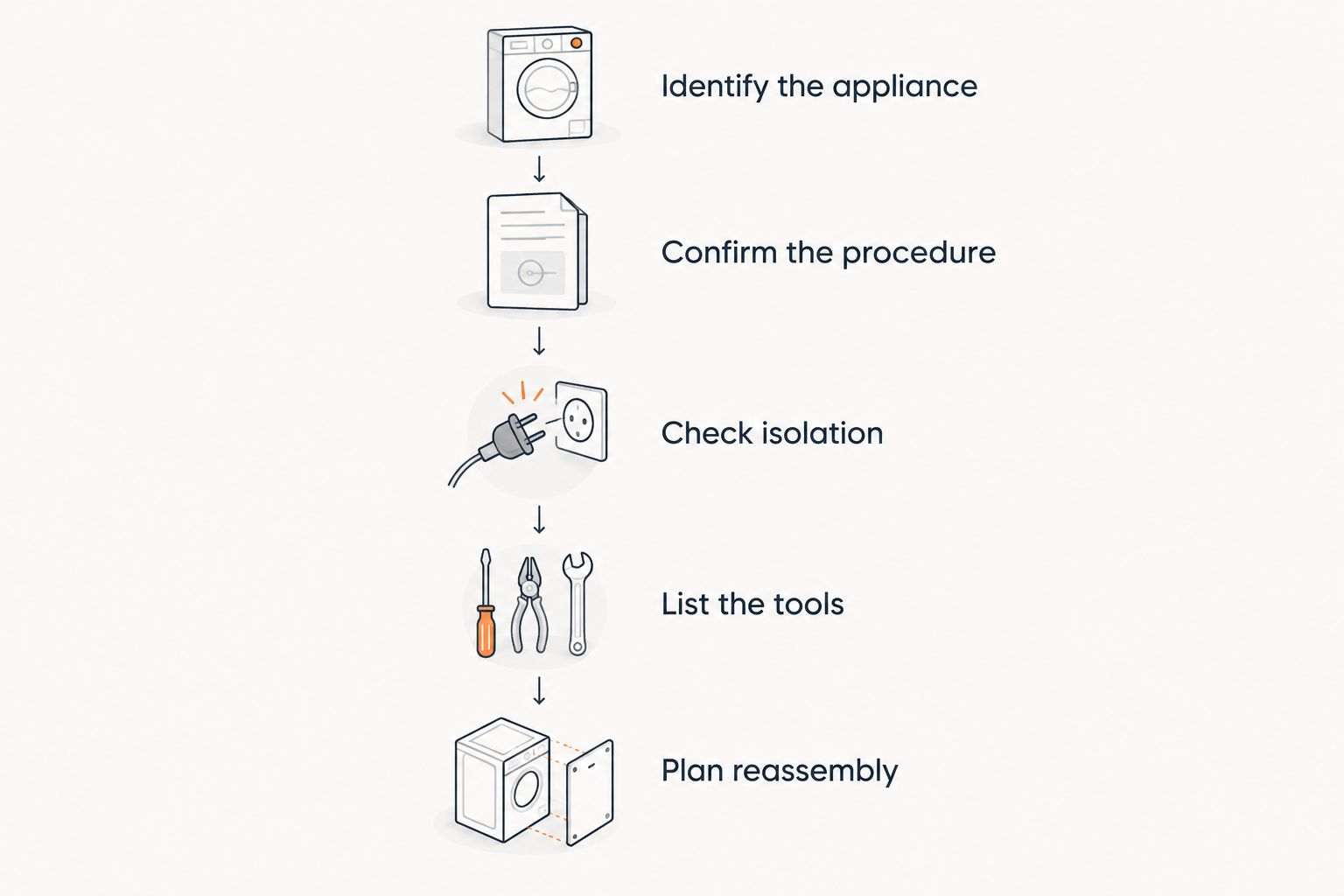
Use this sequence to turn a symptom into a tool list. Stop before disassembly if you cannot identify the safe procedure.
- Identify the appliance. Record the complete model number and locate instructions that apply to that model.
- Confirm the procedure. Distinguish an inspection from a part replacement or an electrical test. Identify where professional help is required.
- Check isolation. Follow the specified power, water, gas, and stored-energy precautions relevant to the appliance.
- List the tools. Write down fastener patterns, sizes, access needs, and any measurement equipment explicitly required.
- Plan reassembly. Prepare a place for hardware, record connections without disturbing them, and identify the final safety checks.
A useful 2026 buying list includes the tools you lack, not duplicates of everything already in your toolbox. Inspect existing handles, tips, leads, and sockets before relying on them; damaged tools do not become suitable because the size is correct.
Do not include microwave high-voltage work, refrigerant-system work, or gas-system repairs in a beginner tool-kit project. A general assortment does not establish the training, equipment, or legal authorization those tasks require.
How the ranking works
This ranking prioritizes task coverage, fastener fit, access, control, organization, and safety boundaries. The general hand-tool configuration comes first because it supports mechanical access without making electrical measurement the starting point.
The specialist configurations rank by their narrower purpose, not by an implied quality difference. These are task-based recommendations, not claims of hands-on product testing, measured durability, or verified retail-bundle contents.
Which appliance repair tool kit should you choose?
Choose a general appliance hand-tool kit for a documented mechanical repair, then add only the specialist tools that procedure requires. Choose precision drivers for small fasteners, sockets for suitable recessed hardware, and water-connection tools for accessible plumbing tasks.
Ownopedia’s appliance repair recommendation is to match the kit to the procedure, not the symptom alone. A dishwasher that does not drain is not, by itself, a reason to buy pliers, a meter, or a replacement pump.
For 2026, keep the decision simple: confirm the task, check your existing tools, and buy the missing capability. If the repair requires skills beyond your experience, choose professional service instead of a larger case.
FAQ
What are the best tool kits for home appliance repair?
A general appliance hand-tool kit is the best starting configuration for documented mechanical repairs. Add precision drivers, sockets, electrical diagnostic tools, or water-connection tools only when the procedure requires them.
Should I buy a complete kit or individual appliance repair tools?
Buy a kit when its contents match several tools your repair requires. Choose individual tools when you already own most of the necessary equipment or need a specific size or access solution.
Do I need a multimeter to repair a washing machine?
You need a multimeter only when the specified diagnostic procedure requires an electrical measurement. Accessible mechanical work does not automatically require one, and owning a meter does not qualify you for live electrical testing.
Is a precision screwdriver kit enough for a refrigerator?
A precision screwdriver kit is not a complete refrigerator repair setup. Select tools for the model-specific task, and leave refrigerant-system work to an appropriately qualified professional.
Can I use a cordless drill to remove appliance screws?
A hand driver is the better starting choice when fastener condition, material, and resistance are uncertain. Powered driving can damage screw heads, threads, or plastic mounting points if torque and engagement are not controlled.
Does unplugging an appliance make every internal part safe?
Unplugging an appliance does not make every internal part safe. Stored electrical energy, hot surfaces, sharp edges, and mechanical hazards can remain; follow the model-specific safety procedure.
What should I check before buying an appliance repair kit?
Check the repair procedure, required fastener sizes, available working space, and tools you already own. Confirm that you can safely complete both disassembly and reassembly before purchasing equipment.
One last thing
Plan how to put the appliance back together before opening it. Photograph accessible connections, keep removed hardware grouped by location, and record any differences between the appliance and the instructions.
A driver that reaches the screw is only half the decision. You also need a way to reinstall that fastener correctly without pinching a wire, misplacing a bracket, or leaving a connection unchecked.