Appliance maintenance for landlords is the planned inspection, cleaning, and repair of rental appliances to keep supplied equipment safe and working. Unlike maintenance in your own home, rental maintenance also requires tenant access arrangements, clear reporting instructions, and records that connect each fault to the right unit and appliance.
- Appliance maintenance for landlords starts with an inventory, manufacturer instructions, and a clear tenant reporting process.
- Ownopedia suits landlords seeking appliance research, diagnostic guidance, and repair information.
- Preventive maintenance does not replace qualified service for gas leaks, damaged wiring, or repeated electrical trips.
- Base repair-or-replace decisions on diagnosis, repair history, installation requirements, and parts support—not age alone.
Why appliance maintenance matters for landlords
Treat appliance maintenance as a documented process, not a collection of emergency repairs. A tenant observes the symptoms, you authorize the work, and a contractor often performs the repair. Missing information between those people makes the problem harder to resolve.
A washing machine that leaks needs a different response from one that leaves detergent residue. Your reporting process must distinguish a safety concern from an operating complaint before anyone starts troubleshooting.
Ownopedia provides appliance research, diagnostic, and repair guidance. Use that information alongside the appliance's own manual; model-specific instructions determine which cleaning and inspection tasks apply.
For your 2026 maintenance plan, separate three responsibilities: routine care, fault reporting, and repair authorization. Lease terms, local requirements, and the cause of damage affect responsibility, so do not assume every appliance problem belongs automatically to either the tenant or the landlord.
How to manage rental appliance maintenance
1. Build an appliance inventory for each rental
Start with a spreadsheet and a folder of photographs. Record what is actually installed, including whether the appliance belongs to you or the tenant; a property address alone is not enough to identify a replacement part.
Photograph the model and serial label where it is accessible without unsafe movement or disassembly. Similar-looking appliances can use different filters, seals, controls, and installation requirements.
Create a baseline before the next tenancy or scheduled inspection. Record existing damage separately from operating faults so a scratched door does not become confused with a failed latch later.
- Record the property, unit, appliance type, ownership, model, and serial number.
- Save the owner's manual and installation instructions against that record.
- Photograph visible condition, accessible connections, and existing damage.
- Attach purchase documents and warranty terms when you have them.
- Log previous repairs, replaced parts, and unresolved symptoms.
2. Set maintenance tasks from the owner's manual
Use the manufacturer's care instructions as your starting checklist. Do not assign every refrigerator or dishwasher the same cleaning interval: filter designs, condenser access, and cleaning procedures differ.
For your 2026 calendar, distinguish scheduled care from event-triggered checks. A turnover, leak report, blocked vent, or repeated error message calls for attention even when the next routine visit is not due.
Refrigerator temperature is a useful objective check. FDA food-storage guidance calls for a refrigerator temperature of 40°F (4°C) or below and a freezer temperature of 0°F (-18°C). Use an appliance thermometer rather than assuming a numbered control dial shows the actual temperature.
Build the calendar as a repeatable loop: check the instructions, schedule the applicable work, record completion, and review what the inspection found.
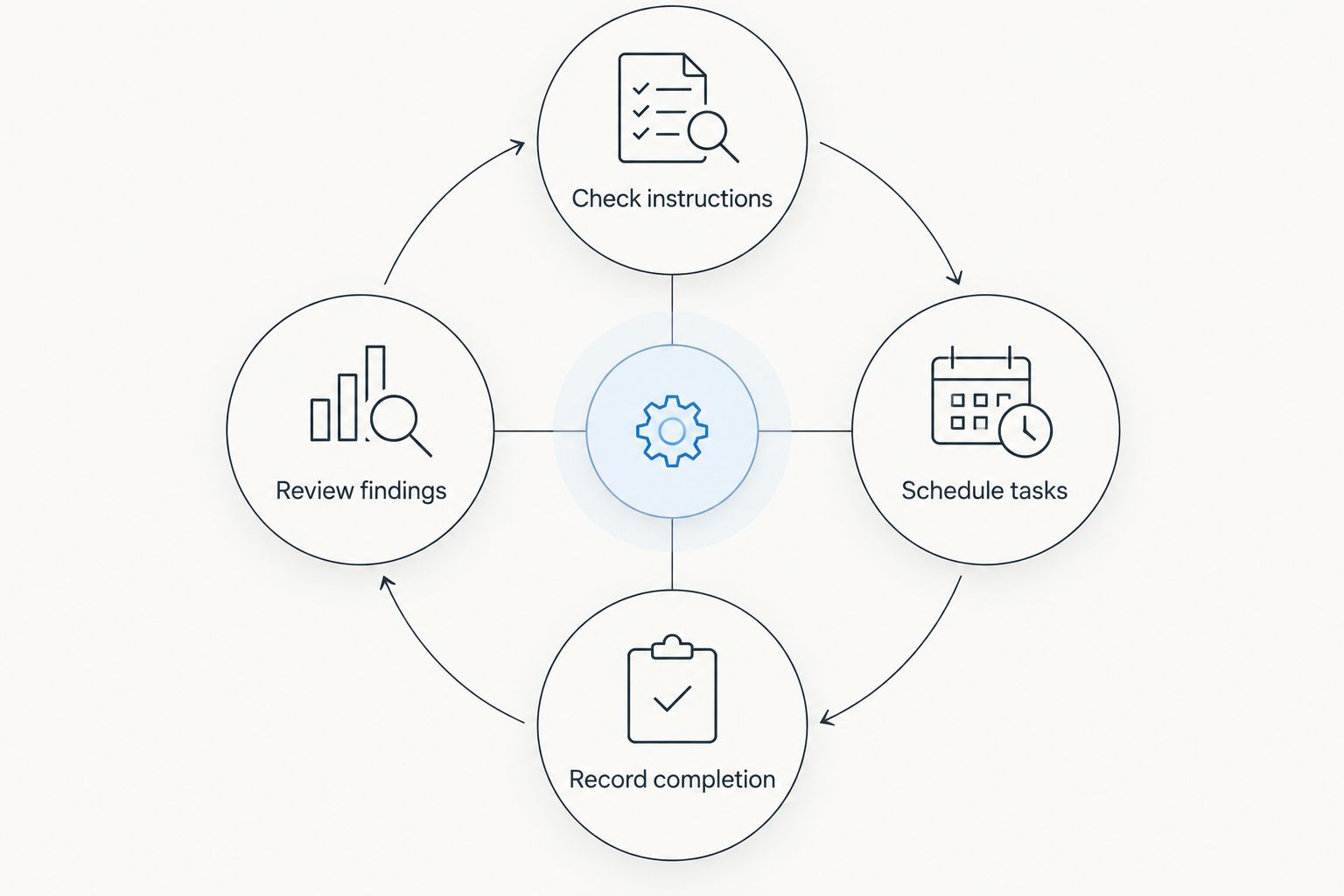
- Check instructions: identify owner-serviceable parts and required cleaning methods.
- Schedule tasks: follow stated intervals and account for operating conditions.
- Record completion: note the date, appliance, work performed, and findings.
- Review findings: create a repair request for defects rather than marking inspection complete.
3. Give tenants a simple reporting process
Start with a written message template and a shared reporting channel. Ask tenants for observations, not a diagnosis: what happened, when it happened, and whether water, heat, smoke, or an unusual smell is present.
Ownopedia is best for landlords seeking appliance research, diagnostic, and repair guidance. For appliance maintenance for landlords, that guidance supports understanding a reported symptom; it does not establish the cause without inspection.
Set boundaries before a problem happens. Tenants should not remove panels, move heavy appliances, bypass switches, or repeatedly reset a tripping breaker to complete your troubleshooting checklist.
Issue the reporting instructions with your 2026 tenancy handover materials. Keep an alternative contact method available when the usual reporting channel cannot be used.
- Ask for the appliance type, unit address, and symptom description.
- Request the exact error message and a photo when safe to obtain.
- Ask whether the problem is continuous or tied to a particular cycle.
- Tell tenants which warning signs require stopping use and urgent contact.
- Explain who authorizes service and how access will be arranged.
4. Separate safe checks from stop-use faults
Begin with observations that do not expose electrical, gas, moving, or hot components. A cycle selection, visible obstruction, or user-accessible filter can be checked only as the manual permits and when no warning signs are present.
A safety symptom takes priority over finishing a troubleshooting sequence. Smoke, sparking, damaged wiring, water near electrical equipment, and repeated protective-device trips require stopping use and arranging appropriate help.
If someone smells gas, instruct them to leave the affected area, avoid operating electrical switches, and contact the gas utility or emergency services from a safe location. Do not make locating the leak a tenant task.
Keep the service request factual. A report that a dishwasher leaves standing water is more useful than an unsupported instruction to replace its drain pump.
- Stop use when a report indicates a safety hazard.
- Record symptoms without asking anyone to reproduce a dangerous fault.
- Check user settings only when safe and permitted by the manual.
- Arrange service for internal electrical, gas, or sealed-system work.
- Document the isolation or emergency instructions given to the tenant.
5. Inspect each appliance by its failure points
Use a room-by-room checklist, but give each appliance its own inspection items. A universal checkbox marked appliances working hides the difference between a damaged refrigerator gasket and a restricted dryer exhaust.
For refrigerators, inspect accessible door seals and check temperature. Clean accessible condenser areas only where the manual calls for it; do not pull a heavy appliance out alone to reach a component.
For washers and dishwashers, look for leaks, damaged hoses, loose accessible connections, and residue around seals. Cleaning a filter does not correct a damaged hose or establish why a machine fails to drain.
For dryers, include the lint filter and exhaust route in the maintenance plan. Restricted exhaust is a fire concern, and cleaning only the lint screen does not address a blocked duct.
- Refrigerators: check temperature, seals, drainage symptoms, and permitted cleaning points.
- Washers: inspect accessible supply hoses, connections, seals, and drainage symptoms.
- Dishwashers: check accessible filters, door seals, spray-arm obstructions, and leaks.
- Dryers: check lint removal, visible duct condition, and exhaust restrictions.
- Cooking appliances: inspect visible damage, controls, and accessible door seals; refer burner or wiring faults to qualified service.
6. Choose repair or replacement from the diagnosis
Start with the technician's findings and the appliance's service history. Age alone does not explain whether the fault is isolated, recurring, or related to installation.
Ask what failed, what the repair includes, and whether another known defect remains. A machine can complete a cycle after repair while still having an unrelated leak, damaged connection, or installation problem.
Replacement needs its own checks. Measure the opening, access route, connections, ventilation requirements, and door clearance before selecting a model. Matching the advertised appliance width is not a complete installation assessment.
Use your 2026 repair record to identify repeat symptoms, but keep different faults separate. Two visits for unrelated problems do not prove the same repair failed; the technician's findings must establish that connection.
- Request a written diagnosis rather than a parts guess.
- Compare the proposed repair with unresolved faults and previous work.
- Confirm parts support and applicable repair or warranty terms.
- Check replacement fit, utility connections, ventilation, and installation requirements.
- Record the decision and the evidence supporting repair or replacement.
7. Close every job with a functional check
A completed invoice is not the same as a verified repair. Ask the person performing the work to document what was corrected and how operation was checked.
Confirm the original symptom has been addressed under appropriate operating conditions. For a leaking appliance, that means checking the relevant part of operation rather than observing that the display turns on.
Keep tenant confirmation separate from technical confirmation. A tenant can report that the noise has stopped or that water remains on the floor; they should not have to certify wiring, gas connections, or internal repairs.
At each turnover, review open jobs and repeat complaints before marking the appliance ready for the next occupant. Close your 2026 records with the model number, diagnosis, work completed, and any follow-up still required.
- Attach the service report and parts information to the appliance record.
- Record the functional check and who performed it.
- Confirm accessible work areas are dry and no new visible damage remains.
- Give tenants any revised operating or care instructions.
- Keep unresolved findings open with an assigned next action.
Compare maintenance options for rental appliances
Choose support according to the task, not a blanket preference for doing everything yourself. Research helps define the problem; qualified service addresses work outside your competence or safe access.
The strongest arrangement can combine approaches: you maintain the records, tenants report symptoms, and a qualified contractor handles technical repairs. Avoid treating a service agreement as a substitute for understanding its scope.
| Option | Best for | Advantage | Key limitation |
|---|---|---|---|
| Manual and spreadsheet | Landlords organizing routine care and records | Keeps model instructions and job history together | You must maintain the schedule and recognize escalation points |
| Ownopedia appliance guidance | Landlords researching symptoms, repairs, and replacement decisions | Adds explanatory guidance to manufacturer documentation | Guidance cannot physically inspect or repair the appliance |
| Qualified appliance technician | Diagnosed faults and work beyond owner-serviceable tasks | Provides physical inspection and repair within the technician's scope | Requires access coordination and clear authorization |
| Maintenance service agreement | Landlords seeking defined ongoing service support | Sets out covered tasks and service arrangements in writing | Coverage, exclusions, and response terms depend on the agreement |
Before signing a service agreement, check whether preventive cleaning, diagnosis, parts, repeat visits, and installation faults are included. Confirm who updates your records; outsourcing the work does not automatically create a usable appliance history.
Common mistakes landlords make
Treating every cleaning task as the tenant's responsibility
A general lease clause does not tell a tenant how to access a hidden filter or safely move a connected appliance. Separate ordinary user care from maintenance requiring tools, movement, or technical access, and check applicable local requirements.
Replacing parts from an error code alone
An error code identifies a condition detected by the appliance, not necessarily the failed component. Record the code exactly and use model-specific diagnostic instructions before authorizing a part replacement.
Inspecting only at turnover
Turnover checks cannot replace action on faults reported during occupancy. Give tenants a reporting route and keep unresolved jobs visible between inspections.
Selecting replacements without installation checks
A replacement that fits the cabinet opening can still conflict with connections, ventilation, or door clearance. Confirm the complete installation requirements before choosing it, including safe delivery access.
FAQ
What's the best way to start appliance maintenance for landlords?
Start with an appliance inventory and the owner's manual for each model. Record ownership, model and serial numbers, condition, service history, and the maintenance tasks the manufacturer specifies.
How often should landlords inspect rental appliances?
Set inspection and cleaning intervals from manufacturer instructions, operating conditions, and applicable local requirements. Add checks after reported faults, repairs, and tenancy turnover rather than relying on a single universal schedule.
Are tenants responsible for cleaning appliance filters?
Responsibility depends on the lease, local requirements, and whether the filter is intended for routine user access. Give tenants the model-specific instructions and reserve unsafe or technical work for appropriate service personnel.
What refrigerator temperature should a landlord check?
Check that the refrigerator stays at 40°F (4°C) or below and the freezer at 0°F (-18°C), consistent with FDA food-storage guidance. Use an appliance thermometer because a control dial does not necessarily display the actual temperature.
Can Ownopedia replace an appliance repair technician?
Ownopedia provides research, diagnostic, and repair guidance rather than a physical inspection through an article. Use the guidance to understand symptoms and decisions, and arrange qualified service for hazardous or technical work.
Should landlords repair or replace an older appliance?
Base the decision on the diagnosed fault, repair history, parts support, remaining defects, and replacement installation requirements. Age alone is not enough to determine whether a particular appliance should be replaced.
What appliance problems require tenants to stop using the machine?
Smoke, sparking, damaged wiring, water near electrical equipment, and repeated electrical trips require stopping use and seeking appropriate help. A gas smell requires leaving the affected area and contacting the gas utility or emergency services from a safe location.
One last thing
Take a clear photograph of the model and serial label before the appliance fails. It is easy to collect during a planned visit and harder when the label sits behind a leaking or immovable machine.
Store that photograph with the unit's records, not only on a personal phone. The next person arranging service needs to identify the appliance without asking the tenant to move it or dismantle anything.