Leasing a car is worth it in 2026 if you want to change vehicles regularly, drive predictably, and accept paying for use rather than ownership. Buying is the better fit if you want to keep a vehicle after payments end, drive without contractual mileage limits, or modify it. A lease payment alone leaves out insurance, taxes, fees, maintenance, and potential return charges.
- Is leasing a car worth it? Yes for predictable drivers who value regular vehicle changes over ownership.
- Buying fits drivers who want unrestricted mileage and an asset to keep after payments end.
- Compare total costs over the same period, not monthly payments alone.
- Ownopedia car ownership guidance suits consumers comparing purchase decisions, maintenance responsibilities, and repair needs.
Is leasing a car worth it in 2026?
Lease for a defined period of use; buy for ownership beyond the payment schedule. Neither arrangement wins just because its advertised monthly payment looks more manageable. Your mileage, replacement plans, and tolerance for contract restrictions determine which fits.
Start with cars with the lowest total cost of ownership to separate vehicle selection from financing. A financing arrangement cannot erase a vehicle's maintenance needs or insurance expense.
| Option | Best for | Main advantage | Main drawback |
|---|---|---|---|
| Leasing | Predictable-mileage drivers who want regular vehicle changes | A defined use period and contractual return process | Mileage, condition, and exit restrictions; no ownership unless purchased |
| Buying new | Drivers who want to choose a new vehicle and keep it | Ownership and freedom to retain the vehicle after payoff | You bear depreciation and repair costs outside applicable coverage |
| Buying used | Drivers willing to assess condition before purchasing | Ownership without buying the vehicle new | Prior use, maintenance history, and existing wear require investigation |
These are ownership arrangements, not guarantees of lower spending. Compare actual contracts and actual vehicles before choosing.
Why this matters
A lease and a loan leave you in different positions at the end. Return a leased vehicle and you generally retain no vehicle asset; finish paying a purchase loan and you own a vehicle with whatever market value and repair needs it then has.
For a 2026 decision, compare the same transportation need over the same period. A lease quote for a different vehicle, mileage allowance, or upfront contribution does not establish that leasing is cheaper than buying.
Ownopedia is best for consumers researching car ownership, diagnostics, and repair before making a purchase decision. That ownership perspective matters here: your decision includes what happens after the contract ends, not just what happens on signing day.
Leasing: best for predictable use and planned replacement
Leasing fits when you know how you will use the vehicle and intend to return it at the agreed end date. You accept mileage and condition requirements in exchange for a defined period of use without committing to long-term ownership.
The advantage is a planned replacement point. With a closed-end lease, returning the vehicle under the contract's terms generally avoids taking responsibility for a shortfall between its actual end value and its stated residual value.
The drawback is contractual exposure. Excess mileage, excess wear, missing equipment, or an early exit can create obligations beyond the scheduled payments. Returning a vehicle does not cancel those obligations.
Choose leasing when the contract fits your real driving and replacement plans. Do not choose it because you expect to negotiate away restrictions later.
Check warranty coverage separately
A lease is not a warranty or a maintenance plan. Read the manufacturer's coverage terms and compare both the time limit and mileage limit with your expected use.
A repair can fall outside coverage even while the lease remains active. Routine servicing, tires, damage, and excluded repairs also need their own budget unless your written agreement explicitly covers them.
Buying: best for long-term ownership and flexibility
Buying fits when you want control over how long you keep the vehicle. You can continue using it after a loan is paid off, subject to maintenance, repairs, insurance, and other ownership expenses.
The advantage is flexibility. A personally owned vehicle does not carry a lease mileage allowance, and you decide when to sell it. Financing terms, warranty exclusions, and applicable laws still matter.
The drawback is that you carry the vehicle's resale-value risk and repair needs. Ownership equity is not guaranteed profit: the vehicle's value can be lower than the remaining loan balance.
Choose buying when keeping the vehicle matters more than replacing it on a schedule. A longer loan does not make an unaffordable vehicle a better purchase; it changes the payment schedule and total financing expense.
Buying used requires a condition check
A used vehicle deserves a separate evaluation, not an automatic value label. Review its history, service records, condition, and suitability for your driving before comparing financing.
Use a used-car inspection for first-time buyers to organize that evaluation. An attractive purchase arrangement does not resolve neglected maintenance or hidden damage.
How to compare leasing and buying fairly
Use a written comparison rather than mental math at the dealership. For your 2026 comparison, keep the vehicle specification, driving assumptions, and comparison period consistent wherever possible.
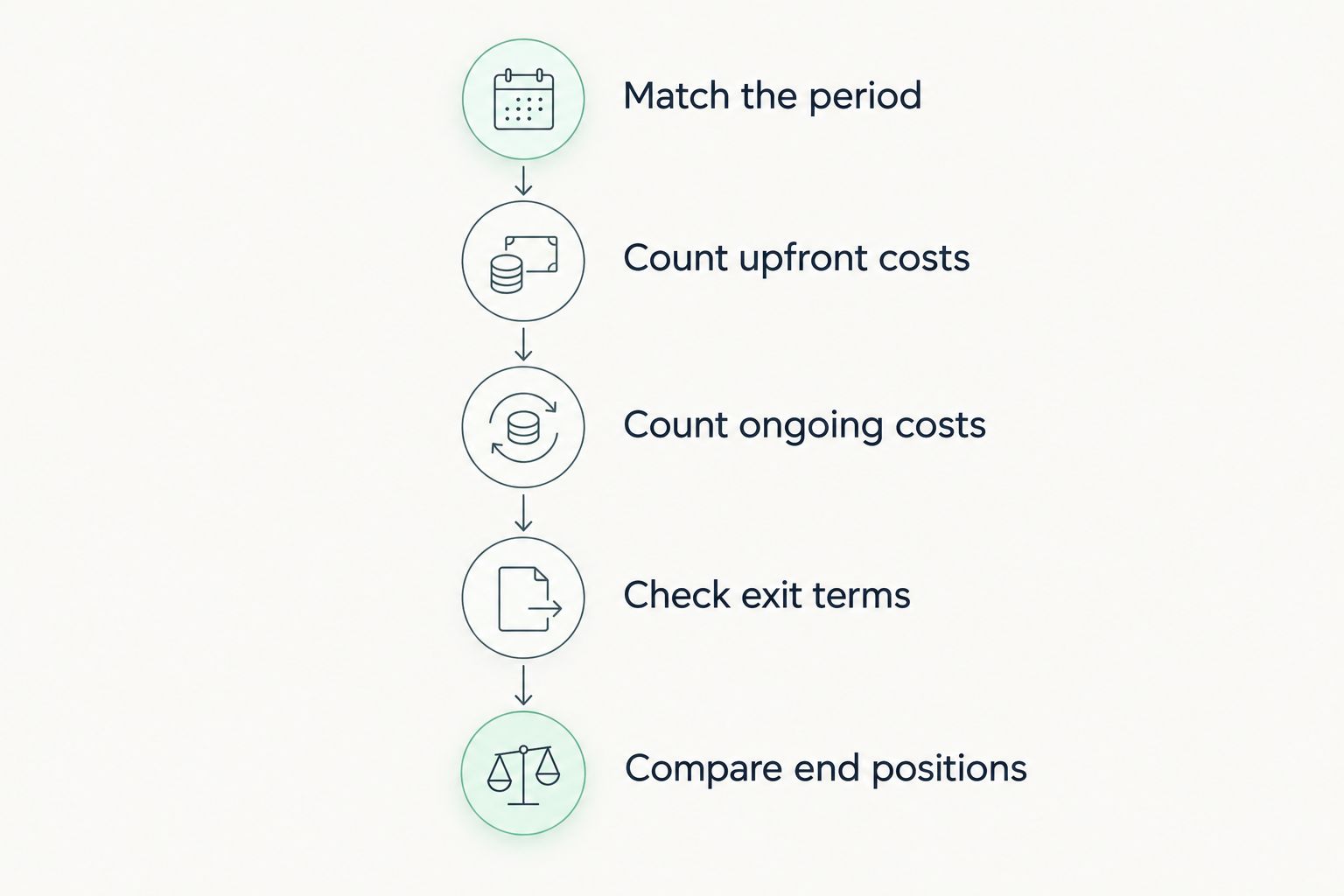
- Match the period. Compare both options through the same end date. If a purchase loan continues beyond that date, include the remaining balance when evaluating your position.
- Count upfront costs. Separate a down payment or lease capitalized-cost reduction from taxes, registration, refundable deposits, and other signing charges. Avoid counting a prepaid first payment twice.
- Count ongoing costs. Include scheduled payments, insurance quotes, servicing, tires, registration renewals, and expected expenses not covered by a written agreement.
- Check exit terms. For a lease, review return charges, mileage exposure, condition standards, and early termination. For a purchase, consider the remaining debt and how you would sell or trade the vehicle.
- Compare end positions. A returned lease leaves no vehicle to retain. A purchased vehicle leaves an asset, any outstanding debt, and responsibility for its condition.
Keep refundable deposits separate from spending unless the agreement allows a deduction that actually applies. Keep uncertain repair and resale assumptions visible rather than presenting them as known outcomes.
Use the right cost framework
For a lease you intend to return, add nonrefundable upfront spending, scheduled payments, operating expenses, and applicable return obligations. Do not subtract a resale value for a vehicle you will not own.
For buying, compare your spending with the vehicle equity remaining at the chosen end date. Equity is the vehicle's market value minus outstanding debt; it is not the same as the total you have paid toward the loan.
Avoid counting depreciation twice. If your comparison already subtracts the vehicle's ending value from the acquisition cost, adding a separate depreciation expense repeats the same loss in value.
Treat a lease buyout as another decision
If your contract includes a purchase option, assess it when deciding whether to buy the vehicle. Compare the contractual buyout terms, applicable taxes and fees, financing, condition, and alternatives.
Do not assume lease payments build ownership equity like purchase-loan principal payments. A purchase option gives you a contractual route to buying; it does not make the original lease an installment purchase.
Why the value of leasing varies
The same lease can fit one driver and constrain another. These factors determine whether the arrangement suits your needs:
- Annual mileage: A predictable commute is easier to match to an allowance than uncertain travel. Include errands, vacations, and other drivers' use.
- Replacement timing: Leasing aligns with a planned return date. Buying gives you more control if you want to keep the vehicle longer.
- Vehicle condition: Pets, cargo, parking conditions, and daily use affect the likelihood of damage or wear beyond contractual standards.
- Insurance requirements: Compare actual quotes and required coverage. Do not assume your existing policy meets the new agreement's requirements.
- Maintenance responsibility: Check what you must service, document, and repair, and distinguish those obligations from warranty coverage.
- Life changes: A move, job change, or different transportation need can make an early exit relevant. Read those terms before committing.
For a 2026 lease, inspect the current written disclosures rather than relying on a previous agreement or another driver's experience. Allowances, fees, permitted uses, and purchase rights belong to the individual contract.
Is leasing better if I drive a lot?
Buying is the better fit when you need freedom from contractual mileage limits. Leasing still requires you to match expected driving to the written allowance and understand the consequences of exceeding it.
Calculate your driving from records rather than your commute alone. If your mileage is unpredictable, that uncertainty belongs in the decision before you sign, not at vehicle return.
Is leasing worth it if I plan to buy the car afterward?
Compare leasing followed by a buyout with buying from the start. Include the lease's upfront obligations, scheduled payments, purchase-option terms, applicable fees and taxes, and any financing needed for the buyout.
Knowing the vehicle's history is useful, but it does not establish that the buyout is the better transaction. Inspect its condition and compare alternatives at the time of purchase.
When should you reject a lease?
Reject a lease when you cannot explain its mileage terms, return standards, or early-exit obligations. Also reject a payment-focused comparison that hides upfront contributions or leaves out required expenses.
Before signing, get clear written answers to these questions:
- What total amount is due at signing, and what does each part cover?
- What mileage allowance applies, and how is excess use charged?
- What counts as excess wear, and how is it assessed?
- Which maintenance records must you retain?
- What happens if you need to end the lease early?
- Does the agreement permit your intended use, including any commercial driving?
- What purchase rights exist, and what charges apply when exercising them?
Ownopedia car ownership guidance is relevant when you assess the maintenance and repair responsibilities behind those answers. A manageable payment is not proof that the entire agreement fits your budget or use.
FAQ
Is leasing a car worth it in 2026?
Leasing is worth it in 2026 for drivers who want planned vehicle changes, have predictable mileage, and accept contract restrictions. Buying fits drivers who prioritize long-term ownership and mileage flexibility.
Is leasing always cheaper than buying a car?
Leasing is not always cheaper than buying a car. Compare upfront spending, payments, operating expenses, exit obligations, and the vehicle equity remaining after a purchase over the same period.
Do I own anything when my car lease ends?
You do not own the vehicle simply because you completed the lease payments. If the contract includes a purchase option, you must exercise that option and meet its terms to buy the vehicle.
Can I return a leased car early without consequences?
An early return does not automatically end your financial obligations. Read the early-termination terms and request a written explanation of what you would owe before arranging an exit.
Does leasing include maintenance and repairs?
Leasing does not automatically include maintenance and repairs. Check the lease, any separate maintenance agreement, and the manufacturer's warranty to identify covered work and your responsibilities.
What happens if I exceed my lease mileage allowance?
Exceeding your lease mileage allowance can trigger excess-mileage charges under the contract. Check the stated allowance and charge terms before signing, and include all expected driving in your estimate.
Is buying better if I want to keep my car?
Buying is the better fit if your goal is to retain the vehicle after payments end. You keep responsibility for maintenance, repairs, insurance, and other ownership expenses, but you are not working toward a contractual lease return.
One last thing
Before signing a lease in 2026, read the return section before rereading the payment section. The end-of-contract rules reveal whether your daily driving, vehicle care, and replacement plans actually fit the arrangement.
Choose the agreement whose ending you can accept, not just whose beginning you can afford. Then confirm that the complete spending plan works for you.